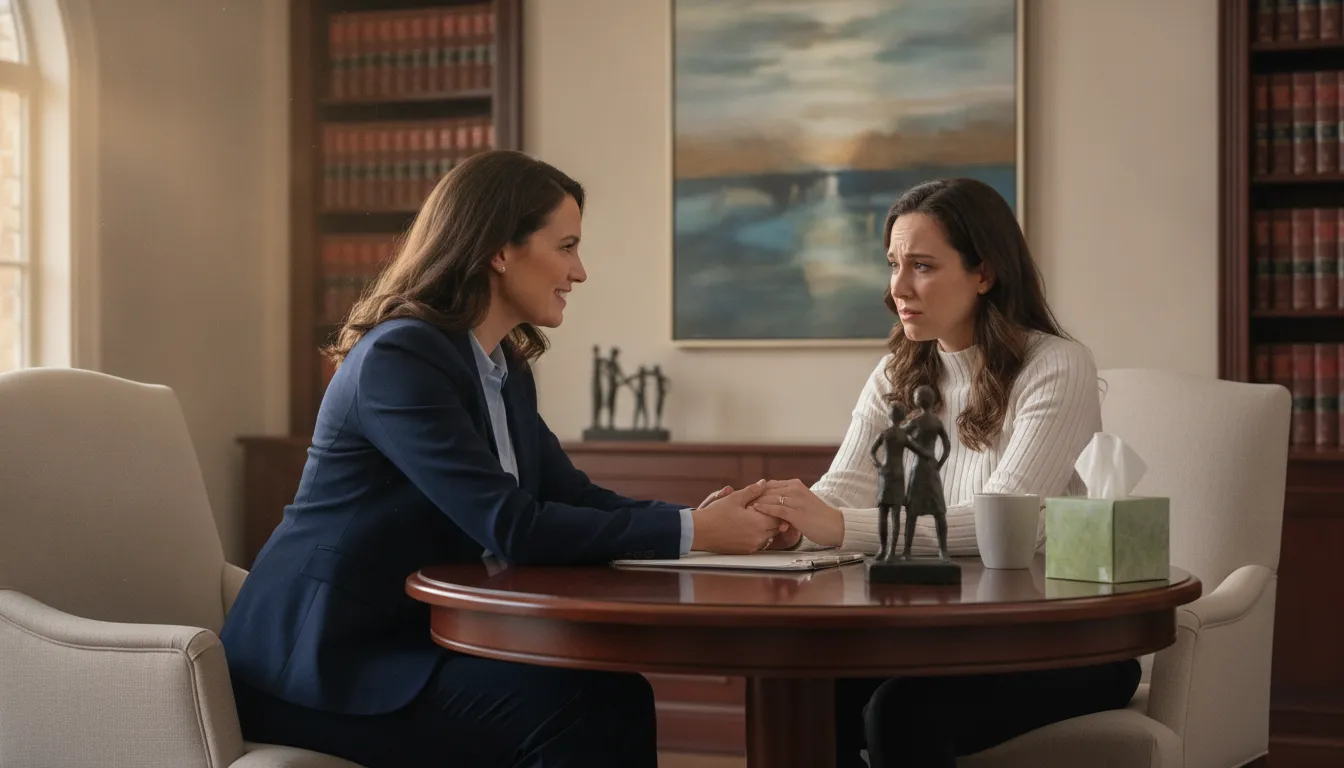
Wrongful Death Lawsuit Guide for Families
A wrongful death lawsuit is a civil claim that may help surviving family members seek accountability after a loved one dies because of negligence, recklessness, or an intentional act. No lawsuit can replace the person you lost, but it can answer practical questions at a painful time: who can file, what losses can be recovered, how long the case may take, and what evidence matters.
If your family is grieving a preventable death, request a free consultation. Counsel Hound can review your situation and connect you with a vetted wrongful death attorney in your state.
What Is a Wrongful Death Lawsuit?
A wrongful death lawsuit is a civil case filed when a person’s death was caused by another party’s wrongful conduct. The responsible party may be a careless driver, a trucking company, a medical provider, a property owner, a manufacturer, or another person or business whose actions caused a fatal injury.
The key point is that a wrongful death case is separate from any criminal case. A prosecutor may pursue criminal charges if the conduct violated criminal law. A surviving family member or estate representative may pursue a civil wrongful death claim to recover compensation for the losses caused by the death. Civil cases also use a different burden of proof, so a family may still have a claim even if no criminal charges are filed.
These claims often grow out of the same events that lead to serious personal injury cases. A fatal car crash, truck wreck, medical mistake, defective product, workplace hazard, or nursing home incident may all support a wrongful death claim if the evidence shows preventable fault.
Who Can File a Wrongful Death Claim?
Who can file a wrongful death claim depends on state law. In many states, the right to file belongs to a surviving spouse, children, parents, or the personal representative of the deceased person’s estate. Some states allow certain dependents, siblings, or other heirs to recover in specific situations. Other states require one estate representative to file on behalf of all eligible beneficiaries.
Because the filing rules are state-specific, families should avoid assuming that the person with the closest relationship automatically has the legal right to start the case. A wrongful death attorney can identify the proper filing party, determine whether probate is needed, and help prevent disputes among relatives from delaying the claim.
Common eligible parties may include:
- A surviving spouse
- Minor or adult children
- Parents of a deceased child
- The estate’s personal representative or executor
- Financial dependents, when state law allows
If more than one person may benefit from the case, the attorney can also explain how any recovery is divided. That allocation may be controlled by statute, a court order, a settlement agreement, or probate rules.
What Types of Cases Lead to Wrongful Death Lawsuits?
Wrongful death lawsuits can arise from many forms of preventable harm. The common thread is not the type of accident, but proof that someone’s conduct caused a death that should not have happened.
Motor vehicle accidents
Fatal crashes involving cars, motorcycles, commercial trucks, pedestrians, bicycles, and rideshare vehicles are common sources of wrongful death litigation. Evidence may include police reports, vehicle data, witness statements, dash camera footage, phone records, and trucking company records. Families dealing with a fatal crash may also want to read Counsel Hound’s guide to fatal car accident lawyer help.
Medical malpractice
A wrongful death claim may arise when a medical error causes a patient to die. Examples may include failure to diagnose a dangerous condition, surgical mistakes, medication errors, birth injuries, anesthesia errors, or failure to monitor a patient after treatment. Medical cases usually require expert review because the family must show that the provider’s care fell below the applicable medical standard.
Unsafe property or workplace conditions
Deadly falls, fires, assaults caused by negligent security, construction incidents, and workplace hazards may support claims against property owners, contractors, employers, or third parties. These cases often turn on notice: whether the responsible party knew or should have known about the hazard and failed to fix it.
Defective products and toxic exposure
Manufacturers and distributors may be liable when unsafe products, drugs, devices, equipment, or toxic exposures cause death. These cases can involve complex scientific proof, company records, warnings, recalls, and expert testimony. Counsel Hound’s practice areas include defective products and toxic torts, including asbestos-related injuries.
What Must a Family Prove?
Most wrongful death cases require proof of four basic elements. The exact legal test can vary by state and by claim type, but the practical questions are usually the same.
| Element | What it means | Example evidence |
|---|---|---|
| Duty | The defendant had a legal responsibility to act with reasonable care. | Traffic laws, medical standards, safety rules, contracts, company policies |
| Breach | The defendant failed to meet that responsibility. | Speeding records, expert opinions, maintenance logs, incident reports |
| Causation | The breach caused or substantially contributed to the death. | Medical records, autopsy findings, crash reconstruction, expert testimony |
| Damages | The death caused legally recognized losses. | Income records, funeral bills, family testimony, benefit records |
Causation is often the hardest fight. Insurance companies and defendants may argue that the death was caused by a preexisting condition, another party, or an unavoidable event. Early investigation matters because physical evidence, witness memories, video footage, and digital records can disappear quickly.
What Compensation May Be Available?
Compensation in a wrongful death lawsuit depends on state law, the evidence, insurance coverage, the deceased person’s age and earning history, the family relationship, and the circumstances of the death. No attorney can promise a specific result at the beginning of a case. A careful attorney can, however, identify the categories of damages that may apply.
Potential damages may include:
- Funeral and burial expenses
- Medical bills related to the final injury or illness
- Lost income the deceased person would likely have earned
- Lost employment benefits, retirement contributions, or household services
- Loss of companionship, guidance, care, and support
- Pain and suffering experienced before death, when state law allows a survival claim
- Punitive damages in cases involving especially reckless or intentional conduct, if allowed by state law
Wrongful death damages can overlap with personal injury damages, but they are not identical. For a broader look at compensation categories, see Counsel Hound’s guide to types of damages in personal injury cases.
Not sure what losses your family can claim? Contact Counsel Hound for a free case evaluation and a referral to an attorney who handles wrongful death cases in your state.
How to File a Wrongful Death Suit
Learning how to file a wrongful death suit can feel overwhelming while your family is still handling funeral arrangements, financial stress, and grief. The process is easier to understand when broken into stages.
1. Identify the proper filing party
The first step is determining who has legal authority to file. This may require reviewing state wrongful death statutes, family relationships, estate documents, and whether a probate case must be opened.
2. Preserve evidence
Evidence can be lost if no one acts quickly. A lawyer may send preservation letters to defendants, insurers, employers, hospitals, trucking companies, property owners, or product manufacturers. These letters can demand that records, video, equipment, vehicles, electronic data, and internal reports be preserved.
3. Investigate fault and insurance coverage
The attorney will gather records, interview witnesses, consult experts, and identify all potential defendants. This step may uncover more than one responsible party. For example, a fatal truck crash may involve a driver, motor carrier, maintenance company, broker, shipper, or manufacturer.
4. Calculate damages
The family and attorney collect proof of financial and personal losses. Economists, medical experts, vocational experts, and life care planners may help value the claim in higher-stakes cases.
5. File the complaint before the deadline
If the claim cannot be resolved through pre-suit negotiation, the attorney files a complaint in the proper court. The complaint identifies the parties, states the legal claims, and asks for damages.
6. Move through discovery, negotiation, and trial if needed
After filing, both sides exchange evidence through discovery. Many cases settle before trial, but a strong trial posture can improve the family’s negotiating position. If the defense refuses to accept responsibility or offer fair compensation, the case may proceed to a jury.
How Long Do Families Have to File?
Every state sets a deadline, called a statute of limitations, for wrongful death claims. Some states use a two-year period, but deadlines vary. The start date may be the date of death, the date the death was discovered, or another date set by statute. Claims involving government agencies, public hospitals, or public employees may have much shorter notice deadlines.
Missing the deadline can permanently end the claim. Families should speak with an attorney as soon as possible, even if they are not ready to make a final decision about litigation. Early advice can protect the right to file while the family takes time to grieve and plan.
How Is a Wrongful Death Lawsuit Different From a Survival Claim?
A wrongful death claim usually focuses on the losses suffered by surviving family members or beneficiaries because of the death. A survival claim focuses on the claim the deceased person could have brought if they had survived.
For example, if a person lived for several days after a crash before passing away, a survival claim may seek damages for the pain, suffering, and medical expenses experienced during that period. A wrongful death claim may seek damages for the spouse’s loss of support, the children’s loss of guidance, and funeral costs. Some cases include both claims, but state law controls what is available and who receives the recovery.
What Should Families Do After a Preventable Death?
Families do not need to build the whole case alone. Still, a few early steps can help protect the claim and reduce avoidable problems.
- Request copies of police reports, incident reports, discharge papers, and death certificates when available.
- Save medical bills, funeral invoices, insurance letters, and benefit statements.
- Keep photos, videos, text messages, emails, and voicemails connected to the incident.
- Write down the names and contact information of witnesses.
- Avoid giving recorded statements to insurance companies before legal advice.
- Do not sign broad releases, settlement papers, or insurance forms without understanding their effect.
- Speak with an attorney before evidence is repaired, discarded, overwritten, or destroyed.
Families should also be cautious with social media. Posts about the incident, grief, finances, family conflict, or the case may be taken out of context by insurers and defense lawyers.
How a Wrongful Death Attorney Can Help
A wrongful death attorney does more than file paperwork. The attorney’s job is to protect the family from pressure, investigate the death, identify every responsible party, and build the proof needed for settlement or trial.
An attorney may help by:
- Explaining who can file under state law
- Opening an estate or working with the personal representative when needed
- Preserving evidence before it disappears
- Hiring experts to analyze medical issues, crashes, products, or financial losses
- Handling communication with insurers and defense lawyers
- Calculating economic and non-economic damages
- Negotiating settlement terms and liens
- Preparing the case for trial if the defense will not act fairly
Counsel Hound is not a traditional law firm. It is an attorney-matching service that helps families cut through legal advertising and find vetted litigators with experience in the right practice area and location. If you want to compare lawyer qualifications, start with Counsel Hound’s guide to top wrongful death attorneys.
When the stakes involve a family’s future, the attorney match matters. Request a free consultation and let Counsel Hound help you find qualified wrongful death counsel.
Frequently Asked Questions About Wrongful Death Lawsuits
What defines a wrongful death?
A wrongful death is a death caused by another party’s negligent, reckless, intentional, or otherwise wrongful conduct. Common examples include fatal crashes, medical malpractice, unsafe premises, defective products, nursing home neglect, and workplace incidents involving third-party fault.
Is a wrongful death lawsuit a criminal case?
No. A wrongful death lawsuit is a civil case seeking compensation for losses connected to the death. A criminal case is brought by the government and may seek penalties such as jail time, probation, or fines. Both types of cases can arise from the same incident.
How long does a wrongful death lawsuit take?
Some cases resolve in months, while complex cases can take years. The timeline depends on the number of defendants, the severity of disputes over fault, the amount of insurance coverage, the need for expert testimony, court schedules, and whether the case settles or goes to trial.
How much is a wrongful death claim worth?
There is no reliable average value that applies to every family. The value depends on liability, available insurance or assets, the deceased person’s income and life expectancy, medical and funeral expenses, family relationships, state damage rules, and the strength of the evidence.
Can families file if the deceased person was partly at fault?
Possibly. Many states allow recovery even when the deceased person shared some fault, although the recovery may be reduced. Some states bar recovery if the deceased person’s fault reaches a certain percentage. A state-specific attorney can explain the rule that applies.
What does it cost to hire a wrongful death attorney?
Many wrongful death attorneys work on a contingency fee, meaning the family pays no upfront attorney fee and the lawyer is paid from any recovery. Counsel Hound’s consultation and attorney-matching service is free for injured victims and grieving families.
Talk With Counsel Hound Before Deadlines Pass
A preventable death leaves families with grief, unanswered questions, and urgent financial concerns. A wrongful death lawsuit cannot undo the loss, but it can help uncover what happened, hold the responsible parties accountable, and protect the family’s future.
Counsel Hound helps families find experienced attorneys without sorting through endless legal ads. The service is free, the consultation is confidential, and there are no upfront fees to get matched with counsel.
Request your free case evaluation today to speak with Counsel Hound about your wrongful death claim.