
If you were hurt in an Uber or Lyft crash, you need clear answers about who pays and what your claim is worth. Call (205) 390-0399 to discuss your uber accident claim with a qualified attorney today. There is no cost to learn your options.
An uber accident claim is a legal demand for compensation after a crash involving a rideshare vehicle. These claims are more complex than standard car accident claims because Uber and Lyft provide layered insurance coverage that changes based on the driver’s app status. When the driver is off the app, only their personal auto policy applies. When they are en route to pick up a passenger, limited company coverage kicks in. During an active trip, Uber provides up to $1 million in liability coverage. The independent contractor status of rideshare drivers also complicates liability, since Uber and Lyft often argue they are not responsible for their drivers’ actions. Victims may pursue compensation for medical bills, lost wages, and pain and suffering from the at-fault driver, Uber’s insurance policy, or both.
This guide explains how rideshare insurance coverage works, who bears liability, what compensation is available, and the specific steps you should take after a crash. Understanding how rideshare accident coverage applies to your situation is the foundation of a successful claim. Unlike a standard personal auto policy, Uber and Lyft drivers carry a second layer of coverage that activates when the app is on. Navigating these tiers is critical for anyone filing an uber accident claim, and having experienced rideshare accident attorneys on your side can make a significant difference in the outcome.
Understanding Rideshare Insurance Coverage for Uber and Lyft Accidents
Period 1: App Off
When a driver is not logged into the Uber or Lyft app, neither company provides any insurance coverage. Only the driver’s personal auto policy applies, just like any other private vehicle on the road. If the driver has minimal state-minimum coverage, the pool of money available for your claim may be limited.
Period 2: App On, Waiting for a Ride Request
Once the driver logs into the app and is available to accept rides but has not yet accepted a trip request, limited contingent liability coverage applies. During this period, Uber provides third-party liability coverage of up to $50,000 per person for bodily injury, $100,000 per accident for bodily injury, and $25,000 for property damage. Lyft offers similar coverage during this same phase. This coverage is contingent on the driver’s personal insurance denying or exhausting the claim first.
Period 3: En Route or On an Active Trip
When the driver has accepted a ride request and is en route to pick up the period, Uber provides up to $1 million in third-party liability coverage and uninsured and underinsured motorist coverage. Lyft offers the same $1 million liability limit during an active ride. This is the strongest protection available for victims and the phase where the largest compensation pools exist.
Because these coverage tiers shift based on app status, it is vital to preserve evidence of what the driver was doing at the time of the crash. Uber and Lyft maintain records of driver app status, and your legal team can request this data as part of the claims process. An experienced rideshare accident attorney can help you navigate these insurance tiers and identify every available source of compensation.
Who Is Liable in a Rideshare Accident Claim?
Determining fault in a rideshare accident requires looking at multiple parties. Unlike a standard two-car collision, an uber accident claim can involve the driver, the rideshare company, other motorists, and third parties whose negligence contributed to the crash.
The Uber or Lyft Driver
The rideshare driver is the most common liable party. If the driver ran a red light, was distracted, was speeding, or otherwise violated traffic laws, they bear fault for the collision. Their personal insurance and Uber’s contingent policy provide the first layer of compensation. Driver negligence such as texting while driving, failing to yield, or driving impaired can form the basis of a claim against the driver directly.
Uber and Lyft as Companies
Uber and Lyft classify their drivers as independent contractors, not employees. This classification allows the companies to argue they are not vicariously liable for their drivers’ actions. However, victims can still pursue claims against the company in certain situations. If Uber or Lyft failed to properly vet a driver, ignored complaints about a driver’s history, or maintained a negligent policy that contributed to accidents, the company may share liability. Courts continue to debate the scope of rideshare company liability, which makes experienced legal guidance essential in these cases. For additional context on the legal landscape, the complete claims guide for Uber accidents provides a thorough overview of your rights.
Other Drivers
Not every rideshare crash is the rideshare driver’s fault. Another motorist who caused the collision is also liable for damages. In that scenario. Victims may have claims against both the at-fault driver’s insurance policy and Uber’s underinsured motorist coverage if the other driver’s policy is insufficient to cover the full loss.
Third Parties
In some cases, a third party outside the crash itself shares fault. Vehicle manufacturers can be liable if a defective part caused or contributed to the accident. Government entities responsible for road maintenance may bear responsibility for hazardous road conditions. Product liability claims against auto manufacturers add another layer of complexity to the legal process.
Because multiple parties and legal theories may apply, working with a legal team experienced in rideshare claims is essential. Counsel Hound connects victims with qualified attorneys who understand the independent contractor defense and know how to pursue compensation from every available source.
What Types of Compensation Are Available After a Rideshare Accident?
Rideshare crashes can cause life-altering injuries that require extensive medical treatment and time away from work. Filing an uber accident claim is often the only way to recover the full cost of your losses. Understanding what types of compensation are available helps you evaluate whether a settlement offer is fair.
Medical Expenses
Compensation for medical care covers emergency room visits, hospital stays, surgery, diagnostic imaging, physical therapy, prescription medications, and ongoing treatment. If your injuries require long-term care, your claim should also account for future medical costs. A personal injury lawyer can work with medical experts to project the full scope of your future treatment needs and ensure those expenses are included in your demand.
Lost Wages and Reduced Earning Capacity
If your injuries prevent you from working, you can recover compensation for the income you lost during your recovery. For victims whose injuries cause permanent limitations that reduce their ability to earn a living, the claim should also include diminished earning capacity. This requires documentation from your employer and medical providers showing how the injury has affected your ability to perform your job.
Pain and Suffering
Beyond financial losses, you may be entitled to compensation for the physical pain and emotional distress caused by the accident. Pain and suffering damages account for the reduced quality of life, anxiety, depression, and loss of enjoyment of activities you once valued. These damages are calculated differently than medical bills and lost wages, and insurance companies often undervalue them in initial settlement offers.
Punitive Damages
In cases where the at-fault driver’s conduct was particularly reckless such as driving under the influence or engaging in aggressive behavior, courts may award punitive damages. These are designed to punish the wrongdoer and deter similar conduct in the future. Punitive damages are not available in every case, but when they apply, they can significantly increase the value of an uber accident claim.
The liability insurance covering the at-fault driver plays a central role in determining how much compensation is available. Car accident attorneys understand how to identify every applicable insurance policy and maximize the recovery from each source.
What To Do After an Uber or Lyft Accident: Key Steps
When a crash happens during an Uber or Lyft trip, taking the right actions at the scene is vital for your health and your future claim. Following a clear plan can help you stay calm and protect your rights to fair compensation.
Safety and Medical Care
Your first priority must be safety. Check yourself and others for visible injuries and move to a safe spot if you can. Call 911 to get help from police and emergency medical responders immediately. Even if you feel fine, you must see a doctor to check for hidden injuries such as internal bleeding or whiplash that may not present symptoms right away. Medical records are a critical component of any uber accident claim because they establish the link between the crash and your injuries.
Scene Evidence and Documentation
If you are able, use your phone to take photos of all vehicles involved, the surrounding road conditions, traffic signs, and any visible injuries. Collect the names and phone numbers of any witnesses who saw the crash. When the police arrive, provide factual information about what happened but do not speculate about fault or admit responsibility. Request the officer’s name and badge number so you can obtain a copy of the police report later.
Reporting and Legal Counsel
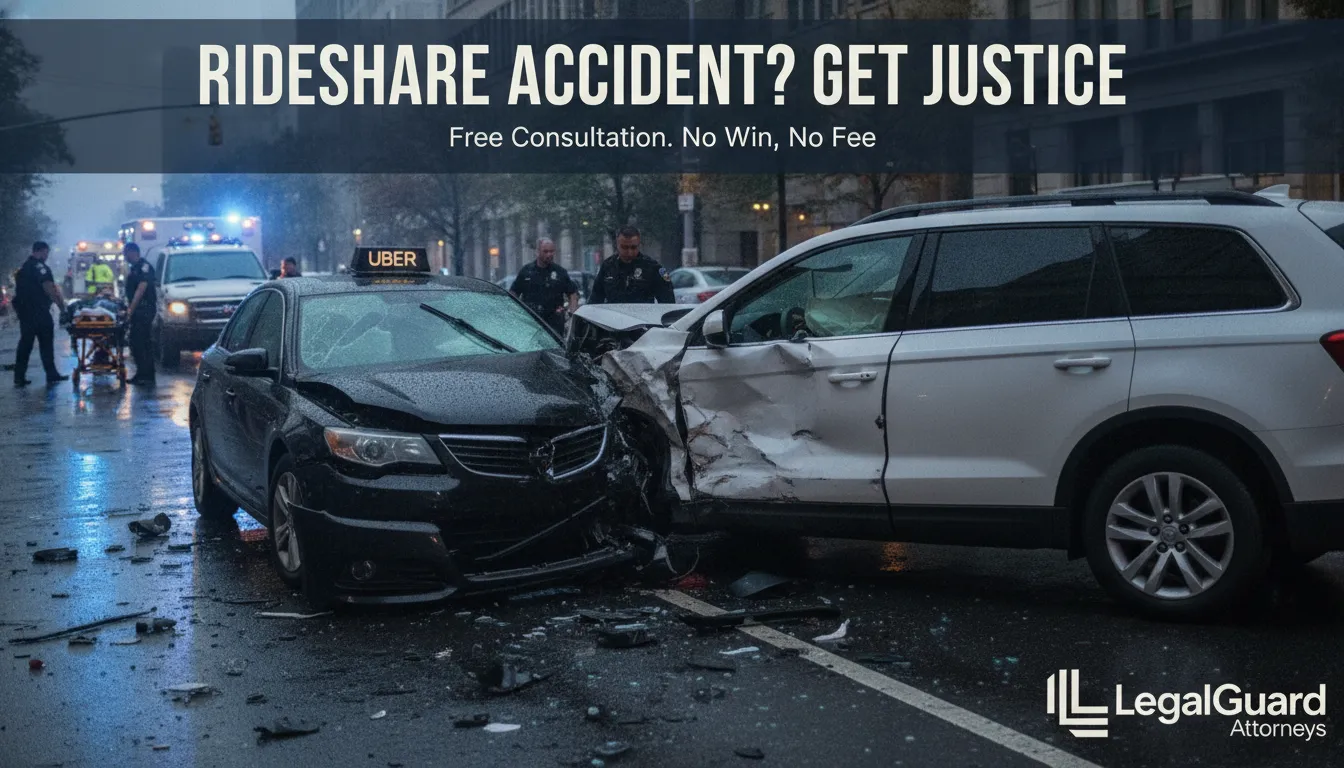
Report the crash in the Uber or Lyft app as soon as possible. This initiates the claims process with the company’s insurance team. However, do not give a recorded statement to any insurance adjuster without first speaking to a lawyer. Insurance agents often ask questions designed to minimize your claim or shift blame. Legal counsel can handle all communications with insurers so that nothing you say can be used against your case. For a more detailed breakdown of the process, the Uber accident claims guide walks through each stage step by step.
- Seek Medical Care: Go to an emergency room or urgent care clinic to get checked for injuries and establish a medical record.
- Call the Police: Contact 911 so an officer responds to the scene and files an official report of the crash.
- Gather Evidence: Take photos of the vehicles and the scene, and collect contact information from all witnesses.
- Report via the App: Use the safety or accident reporting feature in the Uber or Lyft app to log the crash.
- Preserve Records: Do not give statements or sign documents from insurance companies until you have legal representation.
- Contact an Attorney: Get a free case review to understand your options and the full value of your claim.
How Rideshare Accident Claims Differ From Regular Car Accidents
Rideshare crashes are legally distinct from standard car accidents. While a typical collision involves two drivers and their respective insurance policies, an uber accident claim introduces additional layers of complexity including the rideshare company, shifting insurance coverage tiers, and the independent contractor defense.
Insurance Tiers and App Status
Most drivers carry one personal auto insurance policy. Uber and Lyft drivers effectively carry two: their personal policy and a commercial rideshare policy provided by the company. Which policy applies depends entirely on the driver’s app status at the moment of the crash. If the app was off, only the personal policy responds. If the driver was actively on a trip, the company’s $1 million policy takes the lead. This shifting coverage is the primary reason these cases require specialized legal knowledge.
Liability and the Independent Contractor Defense
Liability in a rideshare case is fundamentally different from a standard crash. In a typical collision, the at-fault driver bears responsibility. In a rideshare crash, Uber and Lyft frequently assert that their drivers are independent contractors rather than employees. Which allows them to argue they are not vicariously liable for their drivers’ negligence. This defense can delay resolution and requires a legal strategy that accounts for the company’s efforts to shield itself from responsibility.
| Feature | Regular Car Accident | Rideshare Accident |
|---|---|---|
| Insurance Policies | One personal policy | Personal plus rideshare policy |
| Liability | Usually one driver at fault | Driver and company liability |
| Reporting Steps | Police and insurer only | Police, insurer, and in-app report |
| Coverage Limits | Fixed based on policy | Shifting based on app status |
| Primary Defense | Denied fault for crash | Independent contractor defense |
Understanding these differences is critical before you engage with any insurance company. The car accident attorneys at Counsel Hound have experience handling both standard and rideshare cases and can explain how the law applies to your specific situation.
When To Contact a Rideshare Accident Lawyer
Before You Talk to Any Insurance Company
Insurance adjusters from both the driver’s carrier and Uber’s insurance provider may contact you within days of the crash. Their goal is to settle your claim quickly and for as little as possible. They may ask for a recorded statement or ask you to sign a medical release. You should not agree to either without legal counsel. Once you give a recorded statement, the insurance company has a permanent record they can use to dispute your account later. A lawyer handles all communications with insurers so that nothing you say can be used against you.
When Injuries Are Serious or Long Term
If your injuries required hospitalization, surgery, or ongoing physical therapy, your case has significant value. The insurance company will try to minimize the severity of your injuries. An attorney can gather medical records, consult with specialists, and build a medical narrative that accurately reflects the full extent of your harm. They can also calculate future medical costs and loss of earning capacity, which are easy to overlook when negotiating without representation. Victims of serious collisions often benefit from legal guidance early in the process.
When the Insurance Tiers Are Unclear
If you are unsure whether the driver was on or off the app at the time of the crash, or if the insurance companies are disputing which policy applies, you need legal help. The coverage available to you changes based on the driver’s app status, and the insurance companies have an incentive to apply the lowest possible tier. An attorney can subpoena Uber or Lyft’s records to confirm the exact app status at the time of the collision.
Frequently Asked Questions About Uber and Lyft Accident Claims
How do I file a claim after an Uber accident?
You can file a claim through the Uber app by selecting the safety or accident reporting option under your trip history. You should also report the accident to the police, seek medical attention, and contact a rideshare accident attorney before giving any recorded statements to insurance adjusters. An attorney can guide you through the full claims process and ensure you do not miss any deadlines.
What should I do immediately after an Uber car accident?
Call 911 to report the crash and request medical help if anyone is injured. Take photos of the scene, vehicles, and any visible injuries. Get contact and insurance information from the Uber driver and any witnesses. Report the accident through the Uber app. Contact a rideshare accident lawyer before speaking to any insurance company representative.
Does Uber insurance cover my medical bills if I am a passenger?
Yes, Uber’s liability insurance covers medical expenses for passengers injured during an active trip. Uber provides up to $1 million in third-party liability coverage when a passenger is in the vehicle. This coverage applies to medical bills, lost wages, and other damages resulting from the crash. However, you may need to file a claim and negotiate with the insurance company to receive fair compensation.
Can I sue Uber or Lyft after an accident?
Yes, you can sue Uber or Lyft under certain circumstances. While the companies classify drivers as independent contractors, they may still be held liable if they failed to properly vet the driver. Ignored safety complaints, or maintained policies that contributed to accidents. An attorney can evaluate whether your case has grounds for a claim against the company directly. Legal resources for Uber and Lyft incidents can help you understand the full scope of your options.
What is the average settlement for an Uber accident claim?
Settlement amounts vary widely based on the severity of injuries, the insurance coverage available, the clarity of liability, and the quality of legal representation. Minor soft tissue injury cases may settle for several thousand dollars, while cases involving serious injuries such as traumatic brain injury. Spinal cord damage, or permanent disability can reach settlements or verdicts in the hundreds of thousands or millions. Every case is unique, and an attorney can provide a more accurate estimate based on the specific facts of your crash.
How long do I have to file an Uber accident lawsuit?
The time limit for filing a lawsuit, known as the statute of limitations, varies by state. Most states allow between one and three years from the date of the accident. Missing this deadline typically means you lose the right to pursue compensation through the courts. Consult with a rideshare accident attorney as soon as possible to ensure you meet all applicable deadlines. Legal guidance for accident victims can help you understand the timeline that applies to your case.
Ready To Take the Next Step on Your Uber Accident Claim?
You do not have to navigate the rideshare claims process alone. Counsel Hound connects injury victims with top-rated attorneys who have deep experience handling uber accident claim cases. These attorneys work on a contingency fee basis, meaning you pay nothing upfront and no fees unless they win your case.
Call us today at (205) 390-0399 for a free, no-obligation consultation. A qualified attorney will review your situation, explain your legal options, and help you determine the best path forward. There is no pressure and no cost to learn how Counsel Hound can connect you with the legal representation you need. Contact Counsel Hound online or call today to get started.