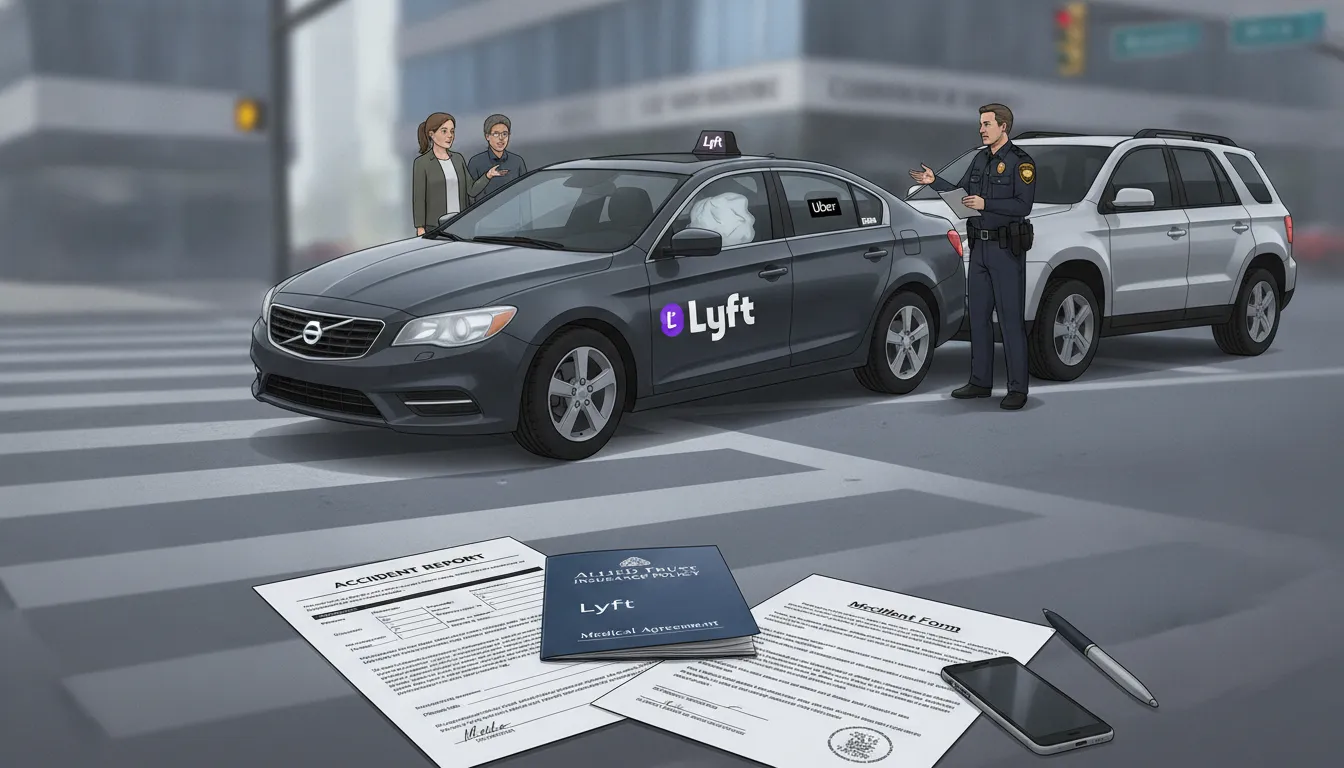
Filing an insurance claim after an Uber or Lyft crash is more complex than a standard car accident. You must navigate multiple policies and strict rules while you recover. The team in our Uber and Lyft accidents practice area can help you find the right path forward.
An Uber accident claim involves a unique set of insurance rules that depend on the driver’s app status. If you are hurt as a passenger, you may have access to a $1 million liability policy for active trips. To get this money, you must report the crash through the app and call the police right away. You often have to deal with the driver’s own insurance and the policy from the rideshare company. According to the Mitchell Hamline School of Law, these cases create new layers of analysis for legal teams. The average settlement for injured victims is about $29,700, but severe cases can pay much more. A legal expert can help you manage these layers so you get paid for your medical bills and lost wages.
You may feel overwhelmed by all the rules and paperwork after a crash with an Uber or Lyft driver. It is vital to understand the different levels of coverage you can get during each part of a driver’s shift. To see which policy applies to your case, we will first look at how rideshare insurance works after an accident.
How Rideshare Insurance Works After an Accident
Rideshare services like Uber and Lyft change how we get around. These companies put more cars on the road every day. This shift affects road safety in many ways. For example, recent data from the NHTSA reports a drop in traffic deaths in early 2025. About 17,140 people died in car crashes in the first half of that year. This was down from 18,680 deaths in the same part of 2024. Even with this drop, crashes still happen often. When they involve a rideshare car, the insurance rules get complex.
The Three Periods of Rideshare Coverage
Insurance for rideshare drivers depends on what they are doing in the app. This is often called the “three-tier” or “three-period” system. Your uber accident claim guide should start by finding which period was on. The coverage limits change based on the app status at the time of the crash.
Period 1 starts when a driver turns on the app but has not found a ride. They are waiting for a match. In this stage, Uber and Lyft give lower liability limits. Both companies usually offer $50,000 for bodily injury per person. They give $100,000 total per crash and $25,000 for property damage. This coverage only helps if the driver’s own insurance does not apply.
Period 2 begins once a driver accepts a ride request. They are now on their way to pick up a passenger. According to the brief, the limits for Period 2 match the first stage. This means Uber gives $50,000/$100,000/$25,000 for these trips. This stage is a critical time for accidents as drivers drive to new spots.
Period 3 is when the driver has a passenger in the car. This stage also covers the time until the trip ends in the app. During this active trip, both Uber and Lyft offer a $1 million liability policy for trips on the app. This large policy protects the passenger and others hurt in the crash. It may also include uninsured or underinsured motorist coverage.
The Gap in Personal Auto Policies
Most drivers keep two separate insurance policies. They have their own personal plan and a policy from the rideshare company. A standard personal policy often excludes “driving for hire.” If a driver has an accident while the app is on, their personal insurer might deny the claim. This creates a dangerous gap in coverage.
This gap is why the rideshare company’s policy is so important. The law treats these cars differently because they are used for business. If a driver does not have a special rider on their personal plan, they need the app’s coverage to kick in. Finding exactly when the app was on is key for any legal case.
Why Coverage Triggers Matter
The trigger for this insurance is the status of the app. If the app is off, only the driver’s personal insurance matters. Once the app is on, the rideshare policy starts to help. This shift is a new part of the law for car accident cases. Lawyers must look at app data to see which policy should pay for the damage.
Finding out which period applies can be hard for a victim. You may need to get digital logs from the rideshare company. This data shows exactly what the driver was doing when the crash happened. Without this proof, an insurance company might try to pay you less than you need. Having a pro look at your case helps you get the full facts.
What To Do After a Rideshare Accident: A Step-by-Step Guide
The moments after an accident are often hard and confusing. If you are a rider in an Uber or Lyft, your first goal must be your safety and health. Knowing how to handle the scene can make a big difference when you later file an uber accident claim. Following a set plan helps make sure you have the proof needed for your case.
Immediate Steps at the Scene
Safety is the most vital part of any crash response. Before you do anything else, check yourself and others for any hurts. If the cars are in a bad spot, move to a safe area away from traffic if you can do so.
Call 911 right away to get help from police and medical teams. A police report is a key piece of proof for your claim. According to the National Highway Traffic Safety Administration, many people lose their lives in crashes each year. Taking every crash seriously is a must. The police will write down what happened and note who was at fault.
Gathering Evidence for Your Claim
Once you are safe, start to get more facts. Take photos of all cars, the road, and any marks on your body. You should also get the names and phone numbers of any people who saw the crash.
Make sure to write down the driver’s name and tag number. Do not rely only on the app for this info. You will need clear proof of the crash to get a fair result from rideshare accident claims later on.
Official Reporting and Legal Help
You must report the crash in the Uber or Lyft app as soon as you can. This tells the firm that a crash took place during a ride. But the app report is not enough on its own. You still need a police report and health files to back up your story.
- Check for hurts and call 911. Your health comes first. Get help if anyone is hurt.
- Record the scene. Take many photos of the cars and the area. Get witness names.
- Report in the app. Use the help menu in the Uber or Lyft app to log the crash.
- File a police report. Tell the police what you saw. Get the report number.
- See a doctor. Even if you feel fine, go to a doctor. Some hurts show up days later.
- Tell your insurer. Tell your own car insurance firm about the crash, even as a rider.
- Contact a lawyer. Speak with an uber accident lawyer to learn about your rights.
Taking these steps helps protect your right to seek pay for your bills and pain. A lawyer can help you deal with the tough rules that come with rideshare crashes.
Who Is Liable in an Uber or Lyft Accident?
Finding the person at fault for your crash is the first step in an uber accident claim. Liability can fall on several people or companies. Most cases focus on the drivers, but the rideshare company or even a car maker could be to blame. Your case depends on the facts of the crash and which insurance policy is used at that moment.
The role of driver mistakes
In most crashes, the driver who made an error is liable. This could be the rideshare driver or a person in another car. If a driver was texting, speeding, or ran a red light, they are likely at fault. Recent data shows that even though deadly crashes dropped to 17,140 in early 2025, many drivers still put others at risk on the road, as stated by the NHTSA.
You may also look at the roles of other people. Sometimes a city is at fault for a broken traffic light. In other cases, a car part might fail. If a tire blows out due to a flaw, the maker of that tire could be liable. These cases are complex, and you should seek help if you think a product failed during your trip.
How the app status affects fault
Rideshare cases are unique because the app status changes which policy is active. Drivers often have two policies: their own and one from the rideshare company, as noted by Mitchell Hamline School of Law. When the app is off, the driver’s personal insurance covers the crash. Once the driver turns the app on to wait for a ride, a limited policy from Uber or Lyft starts.
The biggest policy starts when a driver accepts a trip or has a rider in the car. At this stage, Uber and Lyft provide a $1 million policy for active trips. If the driver is at fault for the crash during this time, this large policy can help pay for your medical bills and lost wages. This system ensures there is a path to pay for injuries caused by a rideshare driver’s mistake.
Company duty and safety risks
You might wonder if you can sue Uber or Lyft directly for a driver’s mistake. This is often hard because these companies call their drivers “contractors” rather than staff. But the companies still have a duty to check their drivers. If a company knew a driver was unsafe but kept them on the app, they could face a claim. Some research in school journals suggests that while rideshare services can reduce some types of crashes, they can also increase risks for people like walkers.
If you face a more serious issue, such as an assault, the legal path might be different. Cases involving Lyft and Uber abuse require a specific legal plan to hold the company liable. No matter what happened, you need to find out who had a duty to keep you safe and how they failed that duty.
How Rideshare Accident Claims Differ From Regular Car Accidents
A standard car crash usually involves two drivers and their personal insurance firms. But if you have an uber accident claim, the legal path gets more complex. You are not just dealing with one person. You are dealing with a driver, a tech firm, and multi-layered insurance plans.
Complex liability and insurance tiers
In a normal crash, fault is often clear-cut between the people behind the wheel. In rideshare cases, your ability to get paid depends on the driver’s app status. Firms like Uber and Lyft use three distinct stages to set coverage levels. If the app is off, only the driver’s personal plan applies. If the driver is waiting for a rider or on a trip, large corporate plans of up to $1 million kick in, as noted by industry data.
Most rideshare drivers must carry two sets of coverage to stay safe. They have a private auto plan and a specific rideshare plan. Research in the Mitchell Hamline Law Journal shows this dual-plan system is now the norm. For you, this means finding the right plan to sue can be a major hurdle without help.
Key differences in the claims process
The table below shows how these cases differ from a typical auto accident. One main shift is how you report the event. You still need to call the police, but you must also notify the rideshare firm through their app. This adds a digital trail that can help or hurt your case. While federal safety data shows road deaths are down, rideshare crashes remain a unique risk for city drivers.
| Feature | Regular Car Accident | Rideshare Accident |
|---|---|---|
| Policy Limits | State minimums (often $25k-$50k) | Up to $1 million for active trips |
| Liability | Individual driver only | Driver plus rideshare company |
| Reporting | Police and insurance company | Police, insurance, and the app |
| Insurance Type | Standard personal auto policy | Personal plus commercial policy |
| Complexity | Low to moderate | High due to app status rules |
Settlement values and time limits
Because the policy limits are higher, rideshare accident claims often result in larger payouts for serious injuries. Data from Counsel Hound shows average settlements for passengers can reach about $29,700, though severe cases may exceed $100,000. However, the legal time limit to file, or the statute of limitations, still applies and varies by state.
You must act fast to protect your rights. In some states, you may have up to three years to file, but waiting can make it hard to get app data or witness notes. Starting your claim early helps ensure that all facts are fresh and evidence is safe. A lawyer can help you sort through the app data to prove who was at fault and which plan should pay your bills.
What Compensation Can You Get From an Uber or Lyft Accident Claim?
Types of Damages You Can Recover
If you are in an uber accident claim, you can seek money for many types of losses. Most people start by looking at their medical bills to cover the cost of care. This covers the first hospital visit, any tests you had, and visits to your doctors.
It also covers future care. If you need physical therapy to get better, those costs can be part of your legal claim too. Getting money for your health costs is a top goal for many victims who are in pain.
You may also get money back for lost wages if you missed work. If you had to stay home to heal, you can ask for the pay you lost. This also applies if you used your sick days or time off to recover from the crash.
In some cases, a crash can make it hard to do your job for a long time. If your future ability to earn money drops, a lawyer can help you seek funds. They will ask for those funds to help your family during this hard time.
Property damage is another common part of a legal claim after an accident. If your car was hit, you could get money to fix it or buy a new one. This also covers items inside the car, like a laptop, phone, or tools you use for work.
Legal experts at Mitchell Hamline School of Law note that insurance limits change based on how the accident happened. This can affect how much money you get in the end from a big company. It is one reason why many people choose to hire a lawyer for help.
Understanding Settlement Amounts
The size of your payout depends on how bad your injuries were during the event. Small cases for minor cuts might only pay a few thousand dollars to the victim. But if you have life-changing injuries, you could get much more for your pain.
On average, passengers in these crashes get about $29,700 for their rideshare accident compensation. For a small hurt, you might get about $1,000. This number can grow based on your medical bills.
For very bad accidents, it can go over $100,000 for a single victim. These big amounts cover things like surgery, long hospital stays, or lost work for years. Every case is different, so your check will look at your own bills and hurt.
Punitive damages might also be possible if the driver was very reckless or dangerous. These are meant to punish the driver for their bad actions on the road. They are not as common but can help in some cases with a lawyer.
Time Limits and Legal Fees
You must act fast to protect your rights after a crash with a rideshare driver. Each state has its own laws for how long you can wait to file. This is known as the statute of limitations for your legal case.
For example, in New York, you usually have three years from the date of the crash to start. If you wait too long, the court will likely throw out your case for good. You will get no money.
Most people worry about how they will pay for a lawyer after an injury. Counsel Hound connects you with firms that use a contingency fee model for their clients. Under this plan, you do not pay any money upfront to start your case.
The legal team only gets paid if they win money for you at the end. This helps anyone get top legal help no matter how much money they have in the bank. It allows you to focus on getting better while they handle the hard work.
Common Injuries in Rideshare Accidents
Uber and Lyft crashes can cause many types of harm. Some are minor, but others can change your life. When you file an uber accident claim, you must show proof of these harms. Doctors can help find damage you might not see at first. Getting a medical check is a key step for your health and your case.
Head and Neck Injuries
Whiplash is a very common neck injury. It happens when your head moves back and forth fast. This force can hurt for weeks or months. You might feel stiff, have headaches, or feel dizzy. It often needs physical therapy to heal well. Some people need months to get back to work. Care costs can range from a few thousand to much more if the pain stays for a long time.
Head hits can lead to traumatic brain injuries, or TBIs. A concussion is a mild TBI, but it still needs rest. Severe TBIs can cause memory loss or trouble with thinking. Some people need long-term care for these mental effects. Research shows crash risks vary based on road use, per data from the National Institutes of Health. Managing a TBI can cost a lot of money over many years.
Spinal and Internal Damage
Back injuries are also common in rideshare crashes. A disc in your spine can slip and press on your nerves. This causes sharp pain that can spread to your legs. Some victims have breaks in their spine. In bad cases, loss of feeling can occur if the spinal cord is hit. Surgery is often needed to fix these grave issues. This can lead to long hospital stays and high bills. Healing can take a long time and might limit how you move.
Internal injuries are hard to find without a doctor. You might have internal bleeding or organ damage from the hit. A seat belt can save your life, but the force can still hurt your ribs or lungs. These issues are emergencies that need fast care. If you do not get help, they can be fatal. This is why you should see a doctor after a crash, even if you feel fine. Quick care makes a big difference in how well you heal.
Emotional Trauma and Latent Injuries
Soft tissue damage includes sprains and torn ligaments. These hurt and can take a long time to fix. You might need a brace for weeks. Broken bones in the ribs, arms, or legs are also likely. A broken leg can take months to heal and may keep you from walking. These physical harms are a big part of many rideshare accident claims. They lead to lost pay and high costs for care.
Mental trauma like PTSD is also a risk. You might feel high fear when you get into a car again. Some people have trouble sleeping or have bad dreams about the crash. Talk therapy can help you deal with these feelings. It is just as important as physical care. Mental health is part of the full healing you need after a bad event. Do not ignore these signs just because they are not physical.
Some injuries do not show up for days. You might feel fine at first, but then wake up in pain later. This is common with neck and back issues. It is vital to get a check right away. This protects your health and helps your legal case. Pay for these claims can vary. Small cases may get about $1,000. Severe cases can be more than $100,000 for life-long harm. You can get a free consultation to talk about your case and your rights.
Frequently Asked Questions
Can I get money if my Uber crashes?
Yes, you can often get money if you are in a crash while using Uber. Rideshare companies like Uber and Lyft give their drivers liability insurance to protect everyone during active trips. According to CMP Law Group, Uber has a $1 million policy for trips that are verified in the app. This money can help pay for medical bills and lost wages after a bad crash.
What if I was a passenger in an Uber accident?
If you are a passenger in an Uber crash, you are typically covered by the company’s $1 million insurance policy. You do not have to worry about the driver’s personal policy first. Data shows that average settlements for injured passengers are about $29,700. These payments can range from $1,000 for minor pain to more than $100,000 for severe injuries. You should report the crash in the app right away.
How long do I have to file an Uber accident claim?
The time you have to file a claim depends on the state where the crash happened. This legal time limit is called the statute of limitations. For example, New York law generally gives victims three years from the date of the crash to start a case. If you miss this date, you could lose your right to get any money. It is best to talk to a lawyer soon.
Is Uber’s insurance liable for my accident claim?
Uber’s insurance is often liable if the driver had the app on and was active during the crash. The level of coverage changes based on what the driver was doing at the time. Research from Mitchell Hamline School of Law shows how these policies work. They start when the driver is on the way to get a rider. If the app was off, the driver’s own personal insurance usually covers the damage instead.
How do I report an Uber accident?
After a crash, you should report the accident to the police and through the Uber app. This helps create a record of what happened for your claim. According to Counsel Hound, you should also take photos of the scene and get medical help right away. These steps build a strong base for your case. If you wait too long to report the crash, it might be harder to get the money you need for your bills.
Ready to start your Uber accident claim?
Waiting to file your claim can lead to lost evidence and missed legal deadlines that may end your case for good. So taking action now is a smart way to protect your rights. Insurance firms often try to settle for less when you do not have a strong team on your side. But we can help you secure the money you need for medical bills and lost wages. Our referral network connects you with vetted legal pros who handle big rideshare firms and their adjusters so you do not have to face this process alone or worry about upfront costs. It is important to focus on your recovery while a professional team handles the complex paperwork and negotiations for your injury claim.
Ready to schedule a free consultation? Call (205) 502-2000 to talk to a rideshare accident attorney today.