Motorcycle accidents cause some of the most serious injuries on the road. According to the National Highway Traffic Safety Administration (NHTSA), motorcyclists are about 24 times more likely to die in a crash than passenger vehicle occupants per mile traveled. If you or someone you love was hurt in a motorcycle crash, you have the right to pursue compensation for medical bills, lost income, and pain caused by another driver’s negligence.
Request a free case evaluation today to get matched with a vetted motorcycle accident lawyer who can protect your rights.
This guide walks you through the motorcycle accident claims process from a rider’s perspective. You will learn what causes most motorcycle crashes, how fault is determined, what compensation you may recover, and the steps you should take to build a strong claim.
Common Causes of Motorcycle Accidents
Understanding what caused your accident is the first step toward building a claim. The most frequent causes of motorcycle crashes include:
- Left-turn collisions: A car turning left across an oncoming motorcycle is one of the most common accident scenarios. The turning driver often claims they did not see the rider.
- Lane splitting and merging: Drivers who fail to check blind spots before changing lanes strike motorcyclists who are legally sharing the road.
- Rear-end collisions: Tailgating drivers who cannot stop in time hit motorcyclists from behind, often at intersections or in heavy traffic.
- Distracted driving: Texting, eating, or adjusting a GPS takes a driver’s eyes off the road long enough to miss a motorcyclist entirely.
- Speeding: Excessive speed reduces a driver’s reaction time and makes impacts far more severe for exposed riders.
- Impaired driving: Alcohol and drugs impair judgment and reaction time. The NHTSA reports that 27% of motorcyclists killed in 2022 had blood alcohol concentrations at or above the legal limit.
- Road hazards: Potholes, gravel, debris, and oil slicks that a car can drive over without issue can cause a motorcycle to lose traction and crash.
- Defective motorcycle parts: Faulty brakes, tires, or fuel systems may contribute to an accident. In these cases, the manufacturer may share liability.
Identifying the cause matters because it determines who is liable and what evidence you need to collect. A motorcycle accident attorney can investigate the crash scene, pull police reports, and work with accident reconstruction experts to establish fault.
What to Do After a Motorcycle Accident
The steps you take immediately after a motorcycle crash can make or break your claim. Here is what to do:
- Call 911: Report the accident and request medical assistance. A police report is a key piece of evidence in any injury claim.
- Seek medical attention: Even if you feel fine, adrenaline can mask serious injuries like internal bleeding or traumatic brain injuries. Get checked at an emergency room or urgent care within 24 hours.
- Document the scene: If you are physically able, take photos of the vehicles, road conditions, skid marks, traffic signs, and your injuries. Capture the other driver’s license plate, insurance card, and contact information.
- Get witness information: Ask bystanders for their names and phone numbers. Independent witness statements carry significant weight with insurance adjusters and juries.
- Do not admit fault: Avoid saying “I’m sorry” or “I didn’t see you.” Anything you say at the scene can be used against you later.
- Notify your insurance company: Report the accident to your insurer, but keep the conversation factual. Do not give recorded statements to the other driver’s insurance company without legal advice.
- Contact a motorcycle accident lawyer: Speak with an attorney before accepting any settlement offer. Insurance companies often make lowball initial offers to riders who do not have representation.
For a more detailed breakdown of immediate post-crash actions, read our guide on 5 things to do if you are in a motorcycle accident.
How Is Fault Determined in a Motorcycle Accident?
Fault determination in motorcycle accident claims depends on state law, the evidence collected at the scene, and sometimes the opinions of expert witnesses. There are two main legal frameworks that affect how much compensation you can recover:
Comparative Fault (Most States)
Most states use a comparative fault system. Under this approach, each party is assigned a percentage of blame for the accident. Your compensation is reduced by your share of fault. For example, if a jury finds you were 20% at fault and awards $100,000 in damages, you would receive $80,000.
Some states follow a “modified” comparative fault rule. In these states, you cannot recover anything if your fault exceeds 50% or 51%, depending on the state.
Contributory Negligence (A Few States)
Alabama, Maryland, North Carolina, Virginia, and the District of Columbia follow contributory negligence rules. In these states, if you are found even 1% at fault, you may be barred from recovering any compensation. This makes evidence collection and legal representation especially important for riders in these states.
Insurance adjusters handling motorcycle claims often try to shift blame to the rider. They may argue you were speeding, not wearing a helmet, or riding aggressively. A skilled attorney pushes back against these tactics by presenting evidence like traffic camera footage, witness testimony, and accident reconstruction analysis.
How Helmet Laws Affect Your Motorcycle Accident Claim
Helmet laws vary by state and can influence the outcome of your injury claim. There are three general categories:
| Helmet Law Type | Who Must Wear a Helmet | Example States |
|---|---|---|
| Universal helmet law | All riders and passengers | Alabama, California, Georgia, New York |
| Partial helmet law | Riders under a certain age (often 18 or 21) | Texas, Florida, Ohio, Pennsylvania |
| No helmet law | No requirement for any rider | Illinois, Iowa, New Hampshire |
Even in states without mandatory helmet laws, not wearing a helmet can affect your claim. The defense may argue that your head or brain injuries would have been less severe if you had worn a helmet. This is sometimes called the “helmet defense.” Whether a court allows this argument depends on state law.
According to the NHTSA, helmets are about 37% effective in preventing fatal injuries to motorcycle riders. Wearing a DOT-approved helmet strengthens your claim by removing one avenue the defense can use to reduce your compensation.
For riders in Alabama specifically, check out our article on how Alabama’s helmet law impacts your motorcycle accident claim.
Injured in a motorcycle crash? Get a free consultation with a proven motorcycle accident lawyer through Counsel Hound. No fees until you win.
What Compensation Can You Recover?
Motorcycle accident claims can include several categories of damages. The specific amount depends on the severity of your injuries, the impact on your daily life, and the strength of the evidence supporting your claim.
Economic Damages
Economic damages cover the financial losses you can document with receipts, bills, and records:
- Medical expenses: Emergency room visits, surgery, hospital stays, physical therapy, prescription medications, and future medical care related to the accident.
- Lost wages: Income you missed because you could not work during recovery. This includes salary, hourly wages, bonuses, and commissions.
- Loss of earning capacity: If your injuries permanently limit your ability to work or force you into a lower-paying job, you can claim the difference in lifetime earnings.
- Property damage: Repair or replacement costs for your motorcycle, helmet, riding gear, and any other personal property damaged in the crash.
- Out-of-pocket costs: Transportation to medical appointments, home modifications for disability, and household help you needed during recovery.
Non-Economic Damages
Non-economic damages compensate for losses that do not have a specific dollar value but still affect your quality of life:
- Pain and suffering: Physical pain and emotional distress caused by the accident and your injuries. Learn more about how pain and suffering claims work.
- Loss of enjoyment of life: If your injuries prevent you from riding, exercising, or participating in activities you enjoyed before the accident.
- Emotional distress: Anxiety, depression, PTSD, and other psychological effects that follow a serious motorcycle crash.
- Loss of consortium: Compensation for the impact of your injuries on your relationship with your spouse or partner.
For a full breakdown of recoverable damages, see our guide on types of damages in personal injury cases.
Uninsured and Underinsured Motorist Coverage for Riders
Not every driver on the road carries adequate insurance. According to the Insurance Research Council, about 14% of drivers nationwide are uninsured. If an uninsured or underinsured driver hits you, your own policy’s uninsured/underinsured motorist (UM/UIM) coverage can fill the gap.
UM/UIM coverage pays for your medical bills, lost wages, and pain and suffering when the at-fault driver cannot. In some states, this coverage is required. In others, you must specifically add it to your policy.
Key points about UM/UIM coverage for motorcycle riders:
- UM/UIM claims are filed with your own insurance company, not the other driver’s.
- Your insurer may still try to minimize the payout. Having an attorney helps level the playing field.
- Some policies exclude motorcycle coverage unless you specifically add a motorcycle endorsement. Review your policy to confirm coverage before you need it.
- Hit-and-run accidents where the other driver flees typically qualify for UM claims. Read more about hit-and-run motorcycle accidents and your options.
For more about common insurance misconceptions riders face, see the top 5 insurance myths after a motorcycle crash.
The Motorcycle Accident Claims Process: Step by Step
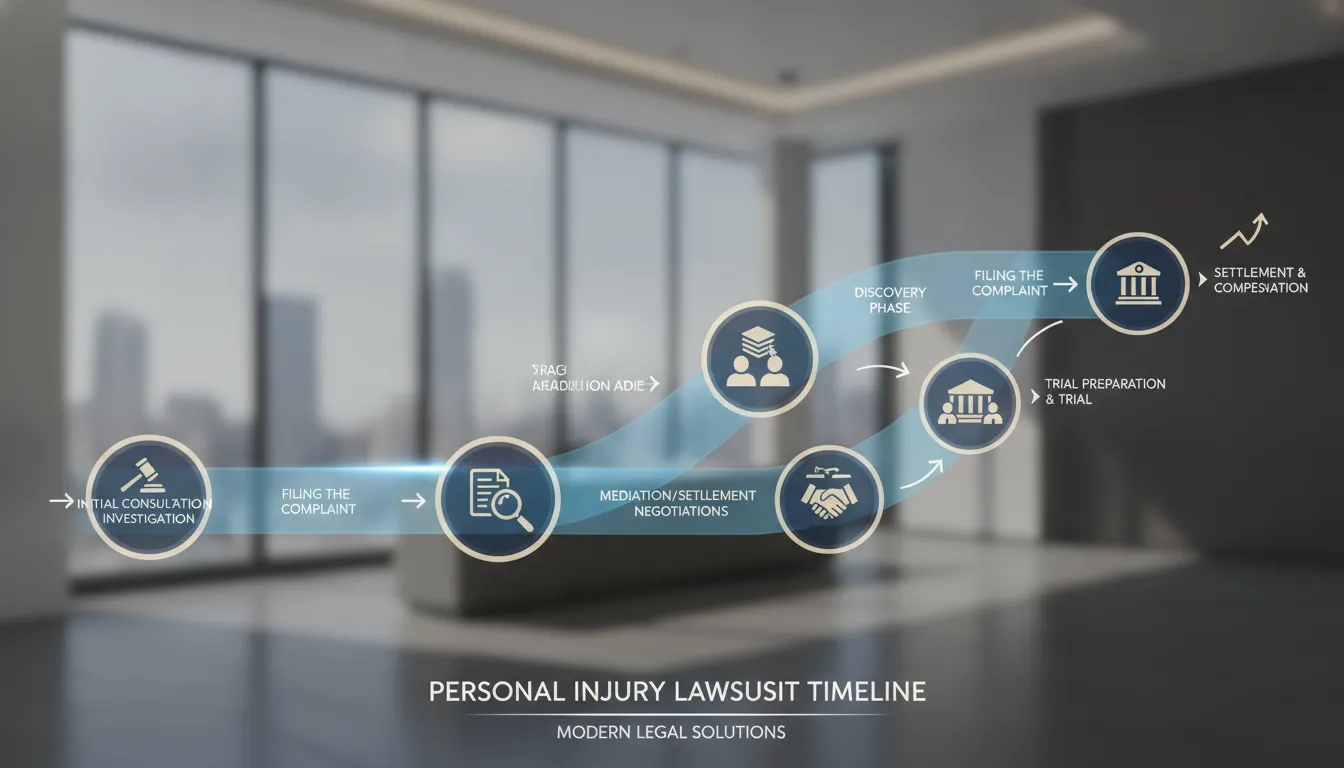
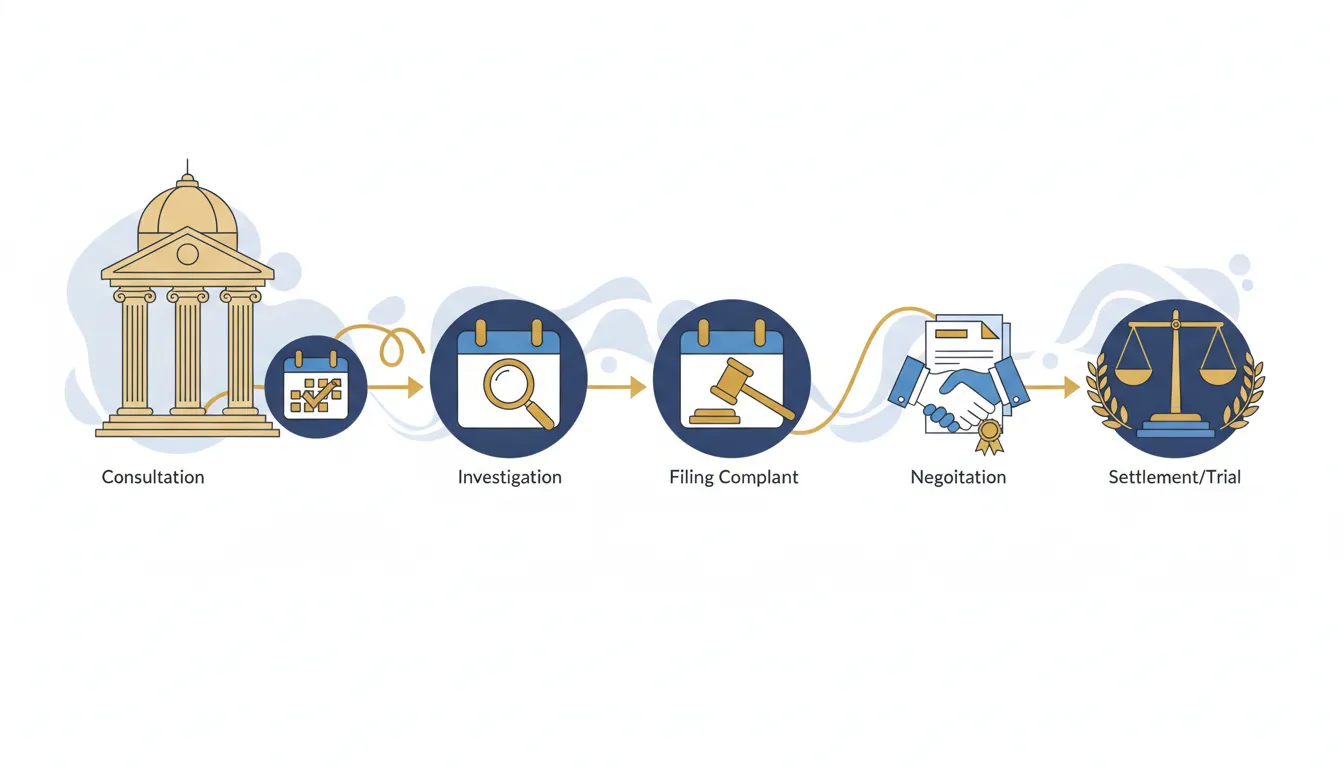
Filing a motorcycle accident claim typically follows these stages:
- Initial consultation: You meet with a motorcycle accident lawyer who reviews your case, explains your legal options, and estimates the potential value of your claim. Most personal injury attorneys offer free consultations and work on a no-win, no-fee basis.
- Investigation: Your attorney gathers evidence, including the police report, medical records, witness statements, photos, and any available video footage. They may also hire accident reconstruction experts.
- Medical treatment: You continue treating your injuries while your lawyer documents all medical expenses and the impact on your daily life. Reaching maximum medical improvement (MMI) before settling helps ensure you do not accept less than your claim is worth.
- Demand letter: Your attorney sends a detailed demand to the at-fault driver’s insurance company. This document outlines the facts, the liability, and the full value of your damages.
- Negotiation: The insurance company responds, usually with a lower counteroffer. Your lawyer negotiates to reach a fair settlement. Most motorcycle accident claims settle during this phase without going to trial.
- Litigation (if necessary): If the insurance company refuses to offer a fair amount, your attorney files a lawsuit. The case then moves through discovery, depositions, and potentially a trial where a judge or jury decides the outcome.
The timeline varies. Straightforward claims with clear liability may settle in a few months. Complex cases involving disputed fault, catastrophic injuries, or multiple defendants can take a year or longer. Learn how a motorcycle crash lawyer maximizes your claim throughout this process.
Common Motorcycle Accident Injuries and Their Impact on Claims
Motorcycle riders lack the structural protection that cars provide. As a result, motorcycle accident injuries tend to be more severe. Common injuries include:
- Traumatic brain injuries (TBI): Concussions and more severe brain injuries can result in long-term cognitive problems, personality changes, and permanent disability.
- Spinal cord injuries: Damage to the spinal cord can cause partial or full paralysis. These injuries often require lifelong medical care and result in the highest settlement values. Read more about spinal cord injury lawsuits and compensation.
- Broken bones: Fractures to the legs, arms, wrists, pelvis, and ribs are common when a rider is thrown from the bike or struck by a vehicle.
- Road rash: Sliding across pavement can strip away multiple layers of skin, leading to infections, nerve damage, and scarring that may require skin grafts.
- Internal organ damage: Blunt force impacts can damage the liver, spleen, kidneys, and lungs. These injuries are not always immediately apparent.
- Amputation: Severe crush injuries in motorcycle accidents sometimes result in the loss of a limb.
More severe injuries typically result in higher compensation because they involve larger medical bills, longer recovery periods, and greater impact on quality of life. An experienced attorney calculates both current and future costs so you do not settle for less than you need.
Dealing with serious injuries after a motorcycle crash? Contact Counsel Hound for a free case evaluation. We match you with proven attorneys who fight for fair compensation.
When Should You Hire a Motorcycle Accident Lawyer?
You should talk to an attorney as soon as possible after a motorcycle accident, especially if:
- You suffered injuries that required medical treatment beyond a basic ER visit.
- The other driver’s insurance company has contacted you with a settlement offer.
- The other driver claims you were partially or fully at fault.
- The at-fault driver was uninsured or underinsured.
- Multiple vehicles were involved in the crash.
- Your injuries prevent you from returning to work.
- The insurance company is delaying or denying your claim.
Motorcycle accident claims are more complex than standard car accident cases. Insurance companies often carry biases against riders, assuming they were riding recklessly. An attorney experienced in motorcycle cases knows how to counter these assumptions and build a case that reflects what actually happened.
Counsel Hound connects injured riders with vetted, experienced motorcycle accident lawyers through our attorney network. Every lawyer in our network has been screened for track record, licensing, and reputation. There are no fees unless you win.
Statute of Limitations: Do Not Wait Too Long
Every state sets a deadline for filing a personal injury lawsuit. This deadline is called the statute of limitations. If you miss it, you lose the right to sue, no matter how strong your case is.
Statutes of limitations for motorcycle accident claims vary by state:
| State | Statute of Limitations |
|---|---|
| Alabama | 2 years |
| California | 2 years |
| Florida | 2 years |
| New York | 3 years |
| Texas | 2 years |
| Pennsylvania | 2 years |
| Ohio | 2 years |
| Illinois | 2 years |
Some exceptions can extend or shorten these deadlines. Claims involving government vehicles, minors, or injuries discovered after the accident may have different rules. Check with an attorney in your state to confirm the deadline that applies to your case.
Frequently Asked Questions
How much is the average motorcycle accident settlement?
There is no single average because settlement values depend on injury severity, medical costs, lost income, and the strength of the liability evidence. Minor injury claims may settle for $10,000 to $50,000, while claims involving traumatic brain injuries, spinal cord damage, or permanent disability can reach $500,000 to several million dollars.
Can I file a claim if I was not wearing a helmet?
Yes. In most states, not wearing a helmet does not prevent you from filing a claim. However, the defense may argue that your injuries would have been less severe with a helmet, which could reduce your compensation in comparative fault states.
What if the other driver does not have insurance?
You may file a claim under your own uninsured motorist (UM) coverage. If you do not have UM coverage, you can file a lawsuit directly against the at-fault driver, though collecting on a judgment can be difficult if the driver has limited assets.
How long does a motorcycle accident claim take to settle?
Simple claims with clear liability may settle in 3 to 6 months. Complex cases involving disputed fault, serious injuries, or litigation can take 1 to 3 years. Reaching maximum medical improvement before settling typically leads to a better outcome.
Do I need a lawyer for a motorcycle accident claim?
You are not legally required to hire a lawyer, but having one significantly improves your chances of receiving fair compensation. Insurance companies have teams of adjusters and attorneys working to minimize payouts. A qualified accident attorney levels that playing field.
What evidence is most important in a motorcycle accident claim?
The police report, medical records, photos of the scene and injuries, witness statements, and any available video footage are the most valuable pieces of evidence. Financial records documenting lost wages and medical expenses also support the dollar value of your claim.
Protect Your Rights After a Motorcycle Accident
A motorcycle accident can change your life in seconds. Medical bills stack up, you may be unable to work, and the insurance company may try to settle your claim for far less than it is worth. You do not have to handle this alone.
Counsel Hound helps injured riders find the right legal representation. Our founder, Richard Frankowski, has spent over 35 years in the legal profession and personally oversees the vetting process for every attorney in our network. We only work with lawyers who have proven track records and reputations for fighting hard for their clients.
Request your free case evaluation now. There are no fees until you win.