After an injury, uncertainty about the legal process can make an already difficult situation feel harder. One of the first questions many people ask is, how long does a personal injury lawsuit take? The honest answer is that the timeline depends on the facts. A straightforward claim may resolve through negotiation before a lawsuit is filed. While a disputed case involving serious injuries, several responsible parties, or a trial can take much longer.
The goal should not be to make a case last as long as possible or to settle it as fast as possible. The goal is to build a well-supported claim, understand the full effect of the injury, and pursue an outcome that accounts for the losses involved. This guide explains the stages of a personal injury case, the delays that may occur. And the practical steps an injured person can take to keep the process moving.
Every state has filing deadlines, and every case is different. Speaking with an attorney promptly can help preserve evidence and clarify which deadlines may apply.
How long does a personal injury lawsuit take?
A personal injury matter may take several months to resolve, but a filed lawsuit can take a year or longer, especially when liability or damages are disputed. There is no reliable one-size-fits-all deadline. The word claim generally refers to the process of seeking compensation from an insurer or responsible party. A lawsuit begins after a complaint is filed in court. Many claims settle before that filing, while others require formal litigation.
The timeline often depends on when the injured person reaches a stable point in treatment. Settling before doctors understand future care needs may leave important losses out of the valuation. On the other hand, unnecessary delays can create financial pressure. An attorney can help balance the need for a complete medical picture against applicable filing deadlines and the client’s priorities.
| Case path | What usually happens | Common timeline influences |
|---|---|---|
| Pre-lawsuit settlement | Investigation, treatment, demand, and negotiation occur without filing a complaint. | Medical recovery, clear liability, available insurance, and insurer response time. |
| Filed lawsuit that settles | The parties exchange evidence, take testimony, and may attend mediation before reaching an agreement. | Discovery scope, expert review, court scheduling, and willingness to negotiate. |
| Case that goes to trial | The court resolves disputed facts or damages after formal trial preparation. | Motion practice, trial calendar, witnesses, experts, and possible post-trial proceedings. |
Why an exact prediction is difficult
Early estimates are based on incomplete information. New medical findings can change expected future costs. A defendant may deny responsibility, or an insurer may dispute whether all treatment relates to the incident. The court’s schedule is also outside the parties’ control. A useful timeline estimate should therefore be updated as facts develop rather than treated as a promise.
The personal injury lawsuit timeline, step by step
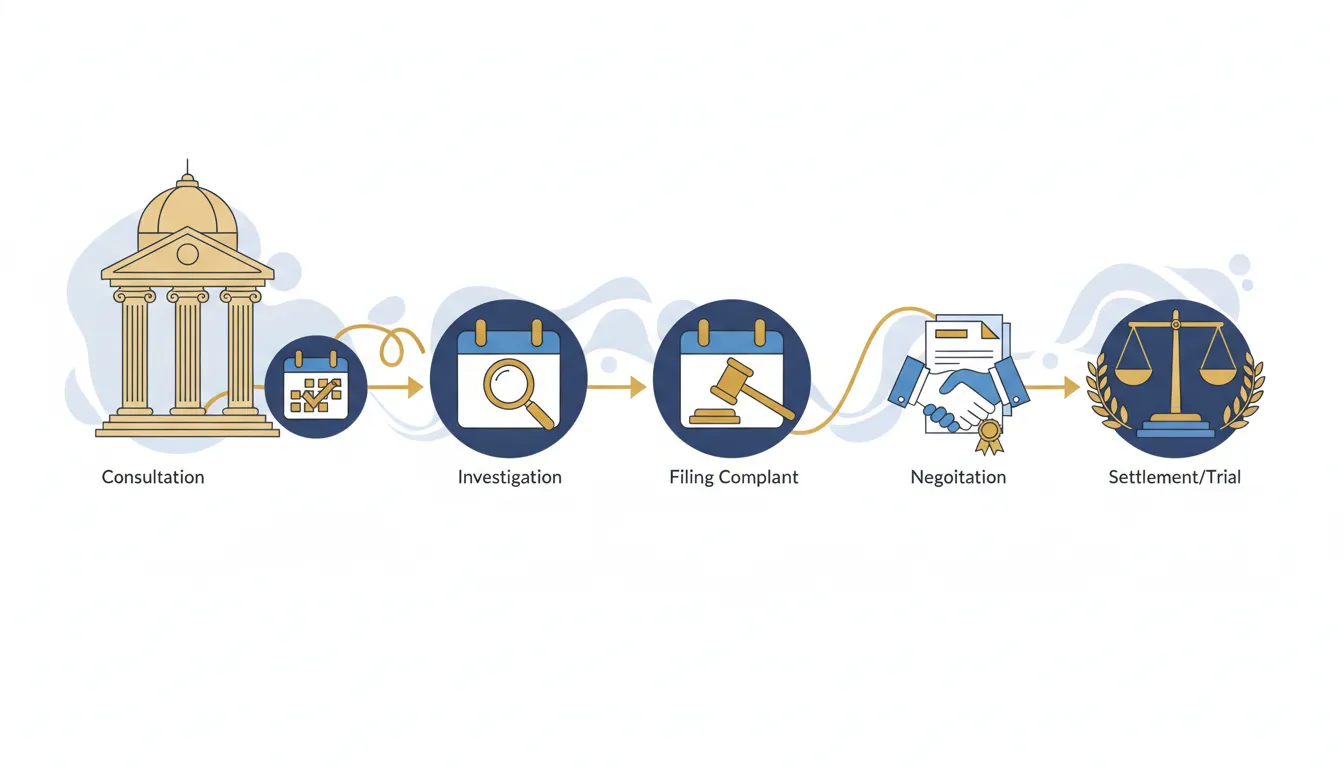
- Medical care and stabilization. Immediate care protects health and creates records showing the nature of the injury. Ongoing treatment may be necessary before future needs are reasonably understood.
- Investigation. The legal team gathers incident reports, photographs, witness information, medical records, bills, employment records, and insurance details. Evidence can disappear, which is one reason to begin promptly.
- Demand and negotiation. Once the available evidence supports a meaningful valuation, a demand may be sent to the insurer or responsible party. The parties may exchange offers and supporting information.
- Filing the lawsuit. If the dispute does not resolve, a complaint begins the court case. The defendant receives formal notice and files a response.
- Discovery. Both sides exchange documents, answer written questions, and may take depositions. Experts may review medical issues, accident reconstruction, or economic losses.
- Mediation and continued negotiation. Settlement discussions can occur throughout the case. Mediation gives the parties a structured opportunity to negotiate with a neutral person.
- Trial and payment. If no agreement is reached, the case proceeds to trial. After a settlement or judgment, liens and case expenses may need to be addressed before funds are distributed.
These stages do not always occur in a clean sequence. Treatment may continue while the investigation proceeds. Negotiations may continue after filing, during discovery, or even close to trial. The appropriate path depends on the evidence and the injured person’s circumstances.
What factors make a personal injury case take longer?
Delays are not always a sign that something is wrong. Some reflect the time required to understand injuries, collect reliable evidence, or give both sides a fair opportunity to evaluate the dispute. Knowing the main variables can make the process more predictable.
Injury severity and medical recovery
Serious injuries often require longer treatment and may have lasting effects that are difficult to measure early. Future procedures, rehabilitation, reduced earning capacity, and long-term assistance can all affect the value of a claim. A case may need more medical documentation or expert review before those losses can be evaluated responsibly.
Disputed liability and several responsible parties
A case can take longer when the parties disagree about who caused the incident. Multiple drivers, businesses, property owners, manufacturers, or insurers can add records, legal arguments, and scheduling conflicts. Each party may conduct its own investigation and raise separate defenses.
Evidence, experts, and court scheduling
Large amounts of medical information, electronic records, surveillance footage, or technical evidence take time to collect and review. Depositions must be scheduled around the availability of lawyers, witnesses, and experts. If a lawsuit is filed, hearing and trial dates also depend on the court’s calendar.
Insurance negotiations and liens
An insurer may request more documentation, dispute the relationship between the incident and treatment, or contest the amount requested. Even after an agreement, medical liens or reimbursement claims may need review before payment can be distributed. A careful legal team should explain what is happening, what remains unresolved, and what the next milestone will be.
Why settling too early can reduce your recovery
When you face high bills and lost pay, you may want to settle your claim fast. You might ask how long does a personal injury lawsuit take because you need the money now. But taking the first offer from a firm can be a big mistake. Speed often comes at the cost of a fair payout. If you settle before you know the full scope of your harm, you may end up with far less than you need.
The need for health clarity
You should not sign a deal until your health is as good as it will get. Doctors call this the point of full healing. If you settle too soon, you might not know if you need more care later. Some hurts, like whiplash or back pain, can last for years. A study shows that 30 percent of minor injury claims take more than two years to finish. This time lets your team see how your body heals over many months.
Future health costs are a huge part of your pay. You may need more help or tools to live your daily life. If you sign a deal now, you cannot ask for more cash later. You must wait until your health team can give a clear look at your long-term needs. This helps you get enough funds to cover your care for the rest of your life. Do not rush into a pact that leaves you with new bills down the road.
The finality of a legal sign-off
When you take a check, you sign a form that ends the case. This is a final legal step. It means you give up your right to sue the other side for that same crash or slip. Even if you find a new hurt next month, you cannot go back for more money. The firm knows this. They often push for a quick deal to close the file before you can see a lawyer. They want to move fast to save their own cash.
The other side wants to pay the lowest sum they can. They might offer a check that looks big but does not cover your real loss. Once that check is gone and the form is signed, the case is closed for good. You lose the power to ask for a better deal. This is why you must stay calm and wait for a fair offer. You must be sure that the sum covers every loss you have felt since the start.
Tracking your full money loss
A fair pay sum must cover more than just your past health bills. It should also cover your lost pay and your loss of future work. If you cannot do the same job as before, your pay should show that change. Tracking these losses takes time and hard work. You need to find pay stubs and tax forms to prove what you have lost. This proof is a must when you ask for more funds.
You also need to track small costs like trips to the clinic or help at home. These small costs add up fast over many weeks. If you settle too early, you may miss these items in your final check. Taking the time to build a full list of your losses keeps you from losing money. A deep look at your bank life is the only way to get the full value of your claim. Being thorough now will help you in the long run.
Can you speed up a personal injury lawsuit?
Many people want to know how long does a personal injury lawsuit take because bills can pile up fast. While you cannot control every part of the legal process, you can take steps to keep your case on track. Some delays come from the courts or insurance companies, but your own actions play a big role in the timeline.
Follow medical advice and keep records
The most important thing you can do is stick to your treatment plan. If you miss doctor visits or stop physical therapy too soon, the insurance company may claim your injuries are not serious. This can slow down payout talks because they will want more proof of your pain. Clear medical records show exactly how much care you need and help your lawyer build a strong case.
Staying organized is also key to a faster process. Keep a file with all your medical bills, pay stubs for lost work, and repair receipts. When your lawyer asks for these papers, sending them right away prevents weeks of back-and-forth emails. A full record of your losses makes it easier to set a fair value for your claim.
Respond quickly and stay organized
Staying in touch with your legal team is vital for a smooth case. When your lawyer asks you to sign a form or give a statement, try to reply within a day. Small delays in forms and files can add up to months of extra time over the life of a lawsuit. Being fast to act helps your personal injury lawyer meet deadlines and push the case forward in court.
You should also let your lawyer know about any big changes in your life. If you move or get a new phone number, tell them right away. If they cannot reach you, they cannot update you on payout offers or court dates. Keeping your lines of contact open helps ensure that no time is wasted on simple tasks.
Avoid social media and common mistakes
What you do online can have a big impact on your legal timeline. Insurance workers often check social media for posts that might hurt your claim. If you post a photo of yourself at a party while claiming a back injury, it can lead to a long and tough dispute. These fights over whether they trust you can drag your case out for many extra months.
It is also vital to know that some factors are simply out of your hands. For example, a study showed that about 30 percent of people with minor road injuries took more than 24 months to settle their claims. Factors like the court schedule and how hard the case is often dictate the pace. While you should do your part to move fast, some patience is often needed to get the best result.
What happens if your personal injury case goes to trial?
Most personal injury cases reach a deal before they ever see a courtroom. But some cases do go to trial when both sides cannot agree on a fair price. This step adds a lot of time to your case. If you wonder how long does a personal injury lawsuit take, the answer often depends on if you must go to court. A trial can turn a case that might have taken months into one that lasts a year or more.
Trial prep and discovery
Going to trial starts with a long phase called discovery. During this time, both sides share facts and proof. Each lawyer will ask questions and look at files. They might also talk to experts who can explain how the injury happened or what it will cost to fix. This work is slow but needed to build a strong case.
The time this takes often grows if you have certain health issues. For example, some studies show that health factors like whiplash can lead to slower claim endings. Your lawyer must gather all medical data to prove your harm. This can push the timeline well past the two-year mark for many people.
The role of motions and court dates
Before the trial starts, lawyers file motions. These are formal requests to the judge to decide on legal points. A judge might rule on what proof the jury can see. Setting dates also causes delays. Courts are often busy, and your trial date may be months away. This waiting period is a major reason why legal work can take so long.
If you have a lawyer, your case may take more time than a simple claim. Research shows that hiring a personal injury lawyer is linked to longer wait times for a final check. This is because a lawyer works to get the full value of your claim rather than taking a quick, low offer from a firm.
The trial and what comes after
A trial involves many steps. It begins with picking a jury and giving opening talks. Then, both sides show proof and call witnesses to the stand. After all the proof is out, the jury decides who is at fault and how much money they should pay. This process can last from a few days to several weeks.
Even after a choice, the case may not be over. One side might file motions to change the result. They could also appeal the choice to a higher court. This adds even more months to the total time. While trials are rare, they are the main cause of the longest legal battles in the personal injury world.
Frequently Asked Questions
How long does a personal injury lawsuit take?
A personal injury lawsuit can take a few months to more than a year to finish. Simple cases with clear facts often settle fast. However, complex cases may go to trial and take a long time. According to a study on PMC, about 30 percent of minor car accident claims take over 24 months to settle. The time varies based on the facts of each legal case.
What factors can delay a personal injury settlement?
Many factors can slow down your legal claim. If your injuries are severe or take a long time to heal, the case stays open. Health issues like whiplash or being overweight can also lead to delays. Research on PMC found that these health issues are main reasons for a slow case closure. Other issues like busy court dates or complex rules can also add more time.
Why does hiring a lawyer increase the time to settle a case?
Hiring a lawyer can lead to a longer settlement time because experts work hard to get a fair result. Data from PMC shows that cases with lawyers are much more likely to take over a year to close. This is often because a lawyer will fight for a fair deal and wait for all facts to come out. They want to make sure you get enough money to cover your bills.
Ready to schedule your free personal injury consultation?
Legal time limits are very strict, and missing a date can mean you lose the right to get money for your harm or medical care costs. Filing a claim has many steps like getting doctor records or talking with insurance firms, so starting now helps you stay away from costly delays. If you wait too long, it may be harder to find proof that clearly shows how the crash changed your life and your health today. You can see how we help on our contact page and reach out to us at any time to start your new case today.
Ready to start your case? Call (205) 390-0399 to schedule a free consultation and learn about your legal choices with our team today.