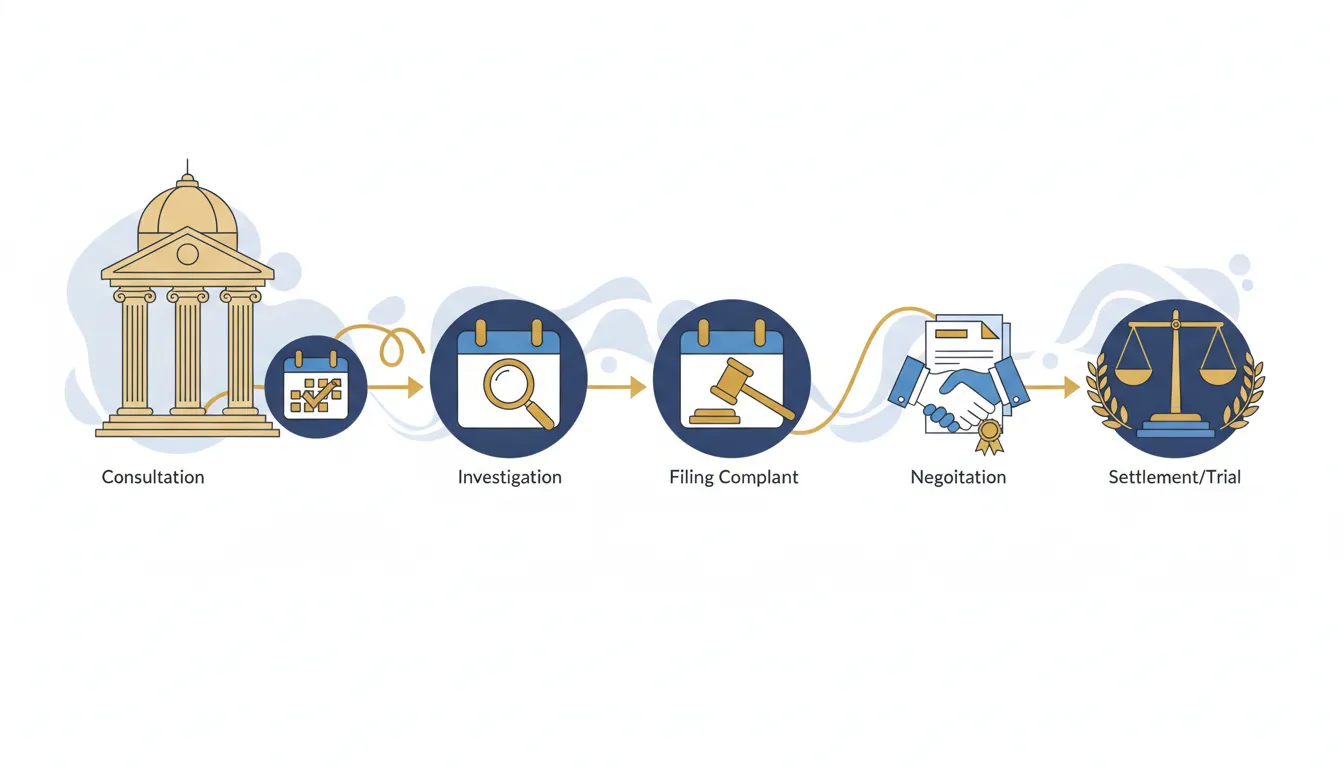
One of the biggest barriers to hiring a lawyer after an injury is the fear of legal costs. When you are already dealing with medical bills and lost income, the idea of paying an attorney by the hour can feel impossible. That is exactly why contingency fees exist. Under a contingency fee arrangement, your lawyer does not charge you any money upfront. You only pay if your case is successful and you receive compensation.
Contact Counsel Hound for a free case evaluation. Our attorneys work on a contingency fee basis, meaning you pay nothing unless you win.
This guide explains exactly what a contingency fee is, how the percentages work, what expenses are covered, and how this payment model compares to other ways of paying for legal representation. If you are considering hiring a lawyer for a personal injury case, understanding contingency fees will help you make an informed decision.
What Is a Contingency Fee?
A contingency fee is a payment arrangement where the attorney’s fee is “contingent” on the outcome of your case. If the attorney wins compensation for you through a settlement or court verdict, they receive a percentage of that amount as their fee. If the case is unsuccessful and you do not receive any money, you owe the attorney nothing for their time and work.
This model is standard in personal injury law and is used in the vast majority of car accident cases, medical malpractice claims, workplace injury cases, product liability cases, and other tort claims. It exists specifically to give injured people access to legal representation regardless of their financial situation.
The contingency fee agreement is a written contract between you and your attorney. It spells out the percentage the attorney will receive, how expenses are handled, and what happens if the case is unsuccessful. You should read this agreement carefully and ask questions about anything you do not understand before signing.
How Much Do Contingency Fee Lawyers Charge?
The standard contingency fee percentage in personal injury cases ranges from 33% to 40% of the total recovery. The exact percentage depends on several factors:
Typical Fee Structures
| Stage of Resolution | Typical Fee Percentage | Why It Changes |
|---|---|---|
| Pre-litigation settlement (before filing a lawsuit) | 33% (one-third) | Less work and risk for the attorney |
| After filing a lawsuit but before trial | 33% to 40% | More preparation, discovery, and depositions required |
| During or after trial | 40% | Trial preparation and courtroom work are the most time-intensive |
| Appeal | 40% or higher | Additional legal work on top of the original case |
Some attorneys offer a flat 33% regardless of when the case resolves, while others use a sliding scale that increases if the case goes to trial. The fee structure should be clearly stated in your contingency fee agreement.
How the Math Works
Here is a simple example of how contingency fees are calculated:
- Your case settles for $300,000
- Your attorney’s contingency fee is 33%
- Attorney fee: $300,000 x 0.33 = $99,000
- Case expenses (medical record fees, expert witnesses, filing fees): $15,000
- Your net recovery: $300,000 – $99,000 – $15,000 = $186,000
The exact calculation depends on whether expenses are deducted before or after the attorney’s fee is calculated. This is an important detail to clarify in your agreement.
What Are Case Expenses?
Case expenses (also called “costs” or “disbursements”) are separate from the attorney’s contingency fee. These are the out-of-pocket costs your attorney pays during the case, such as:
- Court filing fees: Required to file a lawsuit
- Medical record requests: Fees charged by hospitals and doctors to copy your records
- Expert witness fees: Payments to medical experts, accident reconstruction specialists, economists, and other professionals who provide opinions and testimony
- Deposition costs: Fees for court reporters and video recording during depositions
- Investigation costs: Private investigators, scene documentation, and evidence preservation
- Postage and copying: Administrative costs associated with handling the case
- Travel expenses: Costs for travel to depositions, hearings, or trial
In most contingency fee arrangements, the attorney advances these costs during the case and is reimbursed from the settlement or verdict. If the case is unsuccessful, many attorneys absorb these costs, meaning you owe nothing. However, some agreements require clients to repay expenses even if the case fails. Ask your attorney directly how expenses are handled in a loss.
Contingency Fees vs. Hourly Billing
Understanding the difference between contingency fees and hourly billing helps you see why the contingency model is so important for injury victims.
| Feature | Contingency Fee | Hourly Billing |
|---|---|---|
| Upfront cost | None | Retainer required (often $5,000-$25,000+) |
| Monthly bills | None | Billed for every hour of work, phone call, and email |
| Risk to client | No financial risk if the case fails | You pay regardless of outcome |
| Attorney motivation | Directly tied to your recovery amount | Paid the same whether you win or lose |
| Typical hourly rate | N/A | $200-$500+/hour for experienced attorneys |
| Best for | Personal injury, product liability, medical malpractice | Business disputes, criminal defense, family law |
An hourly attorney billing at $350 per hour for a case that requires 200 hours of work would charge $70,000 in fees alone, regardless of the outcome. For an injured person already struggling financially, that cost is often prohibitive. Contingency fees remove this barrier entirely.
State Regulations on Contingency Fees
Most states allow attorneys and clients to negotiate contingency fee percentages freely, but some states impose limits, particularly in certain types of cases:
- Medical malpractice: Several states cap contingency fees in medical malpractice cases. For example, some states use a sliding scale where the attorney’s percentage decreases as the recovery amount increases (e.g., 33% of the first $250,000, 25% of the next $250,000, and so on).
- Workers’ compensation: Some states limit contingency fees in workers’ comp cases to lower percentages than standard personal injury cases.
- Government claims: Claims against government entities may have fee restrictions in certain jurisdictions.
- Court approval: In cases involving minors or incapacitated adults, courts often review and approve the contingency fee arrangement to ensure it is fair.
Your attorney should be familiar with any fee regulations that apply in your state and case type. If you are unsure whether a proposed fee is reasonable, you can contact your state bar association for guidance.
Contingency fee agreements must be in writing in nearly every state. Oral agreements are generally not enforceable. Make sure you receive a signed copy of the agreement for your records.
What Does “No Win, No Fee” Actually Mean?
The phrase “no win, no fee” means exactly what it says: if your attorney does not win your case, you do not pay an attorney fee. This is the core promise of the contingency fee model.
However, “no win, no fee” applies specifically to the attorney’s fee for their time and work. It may or may not cover case expenses, depending on your agreement. Some important clarifications:
- “No win, no fee” means: You will not be billed for the attorney’s professional services if the case is unsuccessful
- It does not always mean: Zero out-of-pocket costs in every scenario. Some agreements require you to reimburse case expenses even in a loss, though many injury attorneys absorb these costs
- What counts as a “win”: Any recovery, whether through settlement, verdict, or arbitration. Even a smaller-than-expected recovery triggers the fee
Before signing a contingency fee agreement, confirm whether “no fee” also means “no expenses” if the case does not succeed.
Why Contingency Fees Benefit Injured Victims
The contingency fee model was designed to level the playing field between injured individuals and well-funded defendants (insurance companies, corporations, and government entities). Here is why it works in your favor:
- Access to justice: You can hire an experienced attorney without needing money upfront, regardless of your financial situation
- Aligned interests: Your attorney’s payment depends on your outcome. They are motivated to get you the highest recovery possible because a larger settlement means a larger fee for them
- Risk sharing: The attorney shares the financial risk of the case. If they invest hundreds of hours and thousands of dollars in expenses and the case fails, they absorb the loss
- Quality screening: Attorneys who work on contingency carefully evaluate cases before accepting them. If an attorney agrees to take your case on contingency, it means they believe it has merit and a reasonable chance of success
- No financial pressure to settle early: Because you are not being billed monthly, there is no pressure to accept a low settlement just to stop the legal bills from accumulating
Request a free consultation with Counsel Hound to discuss your case with an attorney who works on a contingency fee basis. You pay nothing unless you win.
Questions to Ask Before Signing a Contingency Fee Agreement
Protect yourself by asking these questions before you sign:
- What percentage will you charge, and does it change if the case goes to trial?
- How are case expenses handled? Do I owe expenses if the case is unsuccessful?
- Are expenses deducted before or after your fee is calculated?
- Will anyone else in your firm work on my case, and does that affect the fee?
- What is your estimate of the total expenses for a case like mine?
- How and when will I be informed about expenses as the case progresses?
- Can I terminate the agreement, and what happens to expenses and fees if I do?
A trustworthy attorney will answer all of these questions clearly and without hesitation. If an attorney is vague about fees or pressures you to sign quickly, consider looking elsewhere. For help finding the right representation, see our guide on finding a personal injury lawyer near you.
Contact Counsel Hound today for a free case evaluation. We connect injured victims with vetted attorneys who work on contingency. You pay nothing unless you win.
Frequently Asked Questions About Contingency Fees
Can I negotiate the contingency fee percentage?
Yes. Contingency fee percentages are not set by law in most states (though some states cap fees for certain case types, such as medical malpractice). You can ask the attorney if they are willing to adjust the percentage, especially if your case involves a clear liability situation or a high potential recovery.
Do I owe anything if my case is unsuccessful?
You will not owe an attorney fee. Whether you owe case expenses depends on your agreement. Many personal injury attorneys absorb expenses if the case fails, but some require reimbursement. Clarify this before signing.
Is a free consultation really free?
Yes. The initial consultation with a personal injury attorney is almost always free and carries no obligation to hire the attorney. The consultation allows the attorney to evaluate your case and allows you to assess whether you feel comfortable working with them.
What happens if I fire my contingency fee lawyer?
You have the right to change attorneys at any time. However, the original attorney may be entitled to a portion of the fee for the work they already completed. This is typically handled between the attorneys and deducted from any eventual recovery, so it should not cost you anything out of pocket.
Are contingency fees worth it?
For personal injury cases, the data strongly suggests yes. Studies show that injured people represented by attorneys receive significantly higher settlements than those who handle claims alone, even after the attorney’s fee is deducted. The attorney’s experience with valuation, negotiation, and trial preparation typically results in a net recovery that exceeds what you would have received on your own.