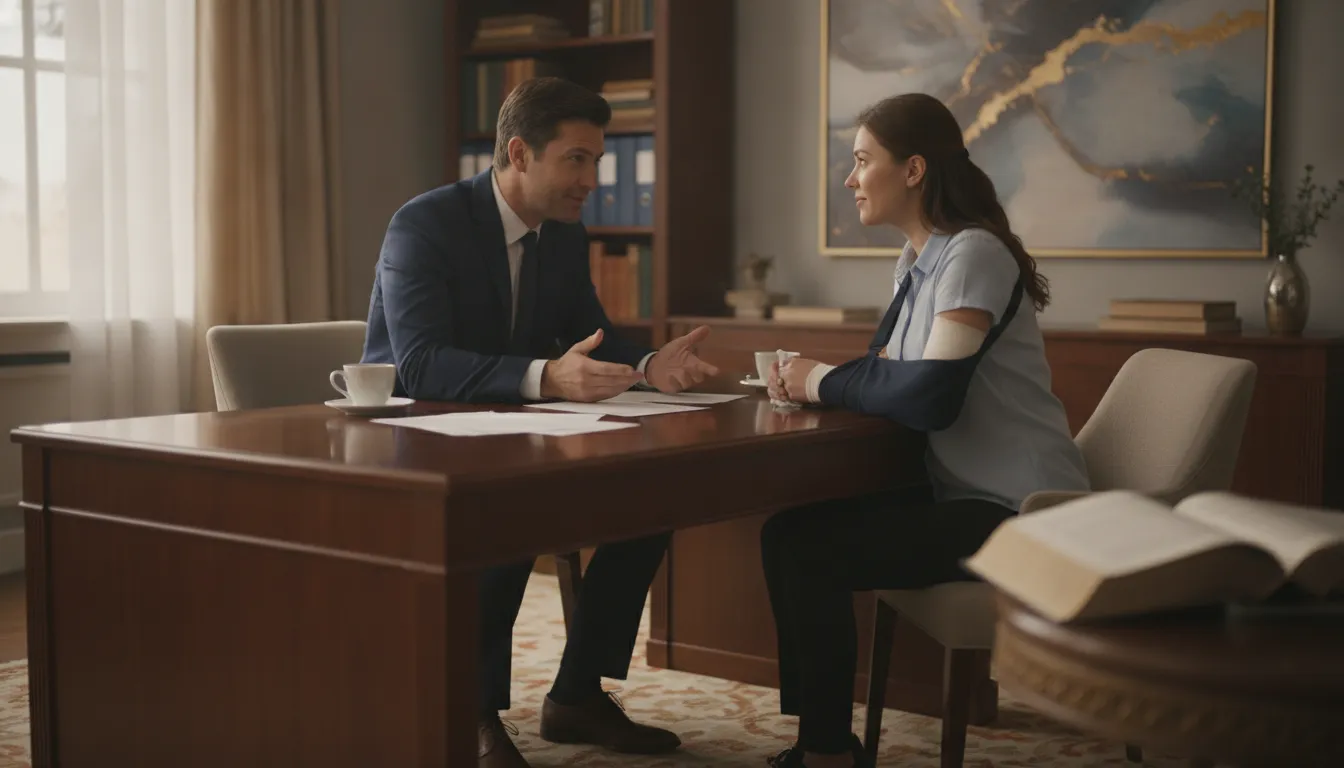
If you were injured on someone else’s property, you may have legal options that go far beyond what the property owner tells you. Premises liability claims hold property owners accountable when their negligence causes harm to visitors, tenants, customers, and sometimes even trespassers.
Request a free case evaluation today to find out whether you have a premises liability claim. No fees unless you win.
Property owners have a legal duty to keep their premises safe. When they fail, people get hurt. Broken stairs, icy walkways, poor lighting in parking garages, exposed wiring in apartment buildings, and even attacks resulting from weak security can all create valid claims. But the strength of your case depends on several factors, including why you were on the property, the type of hazard, and what the owner knew (or should have known) about the danger.
This guide breaks down how premises liability claims work, what property owners owe different types of visitors, and the steps you should take to protect your rights after an injury.
What Is a Premises Liability Claim?
A premises liability claim is a type of personal injury case where an injured person seeks compensation from a property owner or occupier whose negligence caused or contributed to the injury. These claims rest on a simple legal principle: people who own or control property must take reasonable steps to keep it safe for others.
To succeed in a premises liability claim, you generally need to prove four things:
- Duty of care: The property owner owed you a legal obligation to maintain safe conditions.
- Breach: The owner failed to meet that obligation through action or inaction.
- Causation: The owner’s failure directly caused your injury.
- Damages: You suffered real losses, such as medical bills, lost income, or pain and suffering.
The duty of care owed to you depends on your legal classification as a visitor, which brings us to one of the most important distinctions in premises liability law.
Invitees, Licensees, and Trespassers: Why Your Visitor Status Matters
Not every visitor receives the same level of legal protection. Property owners owe the greatest duty of care to people they invite onto the property for mutual benefit, and less to uninvited guests. Most states divide visitors into three categories:
| Visitor Type | Definition | Duty Owed by Property Owner |
|---|---|---|
| Invitee | Someone invited for the owner’s benefit (customers, clients, delivery workers) | Highest duty: inspect for hazards, fix known dangers, warn of risks |
| Licensee | Someone with permission to enter for their own purpose (social guests, door-to-door salespeople) | Moderate duty: warn of known hidden dangers, avoid willful harm |
| Trespasser | Someone without permission to be on the property | Lowest duty: avoid intentional harm or traps (higher duty for child trespassers) |
Invitees receive the strongest protection. If you were shopping in a grocery store, visiting a doctor’s office, or eating at a restaurant when you got hurt, you are likely classified as an invitee. The property owner must actively inspect the premises for hidden hazards and either fix them or clearly warn visitors.
Licensees include social guests, such as someone visiting a friend’s home for dinner. The property owner must warn licensees about hazards the owner already knows about, but is not required to conduct regular inspections on their behalf.
Trespassers generally receive the least protection. Property owners cannot set traps or intentionally injure trespassers, but they usually do not have to maintain the property for the benefit of someone who was not supposed to be there. One major exception is the attractive nuisance doctrine, which applies to children. If a property has a swimming pool, trampoline, or other feature that could attract children, the owner may be liable for injuries to child trespassers who were drawn to the hazard.
Some states have moved away from these rigid categories and instead apply a general “reasonable care” standard to all visitors. An attorney familiar with your state’s laws can explain which rules apply to your situation.
Common Hazards That Lead to Premises Liability Claims
Premises liability claims cover a wide range of dangerous conditions. While slip and fall accidents are the most widely recognized category, they represent only a fraction of the hazards that can ground a claim.
Think you were injured due to a property hazard? Contact Counsel Hound for a free consultation and get matched with an experienced premises liability attorney.
Here are the hazards that most frequently lead to successful claims:
- Wet or slippery floors in stores, restaurants, hospitals, and office buildings
- Broken or uneven stairs and handrails in apartments, commercial buildings, and public spaces
- Poor lighting in parking lots, stairwells, hallways, and building entrances
- Cracked or uneven sidewalks and walkways on commercial and residential properties
- Falling objects from shelves, construction sites, or building facades
- Elevator and escalator malfunctions
- Exposed wiring or electrical hazards
- Inadequate security leading to assaults, robberies, or other criminal acts (sometimes called negligent security)
- Swimming pool accidents due to missing fences, broken drains, or lack of supervision
- Dog bites and animal attacks on the owner’s property
- Toxic substance exposure including mold, lead paint, or chemical spills
- Defective building components such as faulty doors, windows, or fire safety equipment
The common thread in all of these scenarios is that the property owner knew, or should have known, about the hazard and failed to address it within a reasonable time.
Commercial vs. Residential Property Liability: Key Differences
The type of property where your injury occurred affects both the legal standards that apply and the resources available for compensation.
Commercial Property Liability
Business owners and commercial property managers are held to a higher standard because they invite the public onto their premises for profit. This means they must:
- Conduct regular inspections of the entire property
- Maintain written maintenance and inspection logs
- Train employees to identify and report hazards
- Address known dangers quickly or post visible warnings
- Comply with local building codes, fire codes, and ADA accessibility requirements
Retailers, restaurants, hotels, office buildings, hospitals, gyms, amusement parks, and shopping centers all fall into this category. These businesses typically carry commercial general liability insurance, which can make it easier to recover compensation through a claim.
Residential Property Liability
Homeowners and landlords also have a duty to maintain safe conditions, though the standard can differ from commercial properties. Key considerations include:
- Landlords must keep common areas (hallways, lobbies, parking lots, stairwells) in safe condition. They are also responsible for repairs within individual units when tenants report hazards.
- Homeowners must warn social guests about known dangers. If you were injured at a friend’s house because of a loose railing the owner knew about but never mentioned, you may have a claim.
- Homeowners’ insurance typically covers premises liability, though policy limits may be lower than commercial policies.
In rental properties, both the landlord and the property management company can potentially be held liable, depending on who was responsible for maintenance.
How to Document Your Injuries After a Property Accident
What you do in the hours and days after an injury on someone else’s property can make or break your claim. Strong documentation builds the foundation for a successful case.
- Seek medical attention immediately. Visit an emergency room, urgent care, or your primary doctor as soon as possible, even if your injuries seem minor. Some injuries, such as concussions and soft tissue damage, may not show symptoms right away. Medical records create a direct link between the accident and your injuries.
- Report the incident to the property owner or manager. Ask for a written incident report if the injury happened at a business. Get a copy before you leave if possible. If the owner is a private homeowner, document your report in writing (a text message or email works).
- Take photographs and video. Capture the exact hazard that caused your injury: the wet floor, broken step, dim hallway, or damaged railing. Photograph your injuries, the surrounding area, any warning signs (or lack of them), and the lighting conditions.
- Collect witness information. Get names, phone numbers, and email addresses from anyone who saw the accident or the hazardous condition.
- Preserve your clothing and shoes. If the property owner claims you were wearing inappropriate footwear or that your clothing contributed to the fall, having the actual items can help refute those arguments.
- Keep a written journal. Record your pain levels, physical limitations, missed work days, and how the injury affects your daily life. These notes support claims for pain and suffering and other types of damages.
- Do not give a recorded statement to the property owner’s insurance company without speaking to an attorney first. Insurance adjusters may try to minimize your claim or get you to accept partial blame.
The more evidence you gather early on, the stronger your position will be during settlement negotiations or in court.
What Compensation Can You Recover?
Premises liability claims can result in compensation for both economic and non-economic losses. The specific amount depends on the severity of your injuries, the strength of the evidence, and the applicable state laws.
Economic damages include:
- Medical bills (emergency treatment, surgery, rehabilitation, medication)
- Future medical expenses for ongoing care
- Lost wages from missed work
- Reduced earning capacity if the injury limits your ability to work long-term
- Property damage (such as broken personal items)
Non-economic damages include:
- Pain and suffering
- Emotional distress
- Loss of enjoyment of life
- Loss of consortium (impact on family relationships)
Some states also allow punitive damages in cases involving extreme negligence or willful misconduct. For example, if a property owner knew about a life-threatening hazard and deliberately concealed it, punitive damages could apply. A contingency fee attorney can evaluate the full scope of damages in your case.
When Should You Hire a Premises Liability Lawyer?
Not every property injury requires legal representation. Minor incidents with clear insurance coverage may resolve on their own. But you should seriously consider hiring an attorney if any of the following apply:
- Your medical bills exceed a few thousand dollars
- You missed significant time from work
- The property owner denies responsibility or disputes your account
- The insurance company offers a low settlement or delays your claim
- Your injuries are severe, permanent, or require ongoing treatment
- Multiple parties may share liability (landlord, property manager, maintenance company)
- The injury involved negligent security or criminal activity on the property
- The statute of limitations is approaching
Most personal injury attorneys, including those in the Counsel Hound network, work on a contingency fee basis. That means you pay nothing upfront and owe no legal fees unless your case results in a settlement or verdict.
An experienced premises liability lawyer can investigate the property’s maintenance history, gather surveillance footage before it is deleted, identify all responsible parties, and negotiate with insurance companies on your behalf. Early involvement often leads to better outcomes because evidence can disappear and witnesses forget details over time.
Ready to find out if you have a claim? Get a free case evaluation from Counsel Hound. We connect you with proven, vetted attorneys who specialize in premises liability cases.
How a Premises Liability Law Firm Investigates Your Case
Once you hire an attorney, they will typically take several steps to build your case:
- Preserve evidence: Send a spoliation letter to the property owner, requiring them to preserve surveillance video, maintenance logs, inspection records, and incident reports.
- Investigate the scene: Visit the property, take measurements, photograph conditions, and identify code violations.
- Review your medical records: Connect your documented injuries to the specific hazard on the property.
- Identify all liable parties: In commercial settings, the tenant, landlord, property management company, and maintenance contractor may all share responsibility.
- Calculate full damages: Account for past and future medical expenses, lost income, diminished earning capacity, and non-economic losses.
- Negotiate or litigate: Most premises liability claims settle out of court, but a willingness to go to trial often leads to better settlement offers.
Statutes of limitations for premises liability claims vary by state, typically ranging from one to six years after the injury. Missing this deadline almost always means losing your right to file a claim, so consulting an attorney early is important.
Frequently Asked Questions About Premises Liability Claims
Can I file a premises liability claim if I was partially at fault?
In most states, yes. Many states follow “comparative negligence” rules, which reduce your compensation by your percentage of fault rather than eliminating it entirely. For example, if you were 20% at fault for not watching where you walked, your award would be reduced by 20%. A few states bar recovery if you were 50% or more at fault, so the specific rules in your state matter.
How long do I have to file a premises liability claim?
The statute of limitations varies by state, typically ranging from one to six years from the date of the injury. In some states, the clock may start from when you discovered (or should have discovered) the injury rather than the date it occurred. Missing the deadline generally means you lose your right to sue.
What if the property owner had a “wet floor” sign posted?
A warning sign does not automatically protect the property owner from liability. If the sign was not placed in a visible location, if the hazard existed for an unreasonable length of time, or if the owner could have fixed the problem instead of just posting a sign, you may still have a valid claim.
Are landlords liable for injuries in a tenant’s apartment?
Landlords are generally liable for hazards in common areas (hallways, lobbies, stairwells, parking lots) and for conditions in individual units that tenants reported but the landlord failed to fix. If a hazard was caused entirely by the tenant and the landlord had no knowledge of it, the landlord may not be liable.
Does premises liability cover injuries from criminal activity on the property?
It can. If the property owner failed to provide adequate security, such as working locks, security cameras, proper lighting, or security personnel, in an area with known criminal activity, a negligent security claim may apply. These cases require showing that the criminal act was foreseeable and that better security measures could have prevented it.