Repeated robocalls and spam texts are more than an annoyance. In some circumstances, they may violate federal law and give you the right to seek compensation. Your rights under the TCPA can help you stop certain unwanted communications, document violations, and hold a caller accountable.
Request a free TCPA case evaluation from Counsel Hound.
The Telephone Consumer Protection Act, or TCPA, restricts certain automated calls, prerecorded messages, telemarketing calls, and text messages. The rules are detailed, and not every unwanted contact is illegal. Still, knowing the core protections can help you recognize a potential violation and respond without losing valuable evidence.
This guide explains the law in practical terms. It does not provide legal advice for a specific situation.
What rights under the TCPA protect consumers?
Congress enacted the TCPA to protect consumer privacy from intrusive telephone marketing practices. The law and related Federal Communications Commission rules govern several types of calls and messages. The protection that applies depends on the purpose of the contact, the technology used, the number called, and whether the consumer gave valid consent.
The right to control certain automated communications
The TCPA limits certain calls made with an automatic telephone dialing system and calls that use an artificial or prerecorded voice. It also applies to text messages in many circumstances. Marketing communications often face stricter consent requirements than non-marketing communications.
A company cannot avoid responsibility merely because a vendor placed the calls. Depending on the facts, the business whose products or services were promoted may also be responsible. Identifying every potentially responsible party is an important part of reviewing a claim. Counsel Hound’s TCPA attorney resource explains how legal counsel can investigate robocalls and spam texts.
The right to say stop
Consumers can often revoke previously given consent through reasonable means. Examples include telling a caller to stop, replying STOP to a text, or submitting an opt-out request through a channel offered by the sender. The effectiveness of a revocation request can depend on how consent was obtained and the circumstances, so save proof of what you sent and when you sent it.
The right to pursue a private claim
The TCPA allows consumers to bring private lawsuits for certain violations. Available remedies may include actual monetary loss or statutory damages, as well as an order stopping future unlawful contacts. A successful result is never guaranteed, and a legal professional should review the evidence before estimating a claim. The broader guide to filing a lawsuit against a company describes major stages consumers may encounter.
The FCC’s consumer guide to unwanted robocalls and texts provides current information about federal rules and reporting options.
Which calls and texts may violate the TCPA?
Not every irritating call violates the TCPA. A live call from a person, a prerecorded sales pitch, and an account alert can be treated differently. Consent, message content, and the number contacted all matter.
| Communication | Potential concern | Evidence to keep |
|---|---|---|
| Prerecorded telemarketing call | May require prior express written consent | Voicemail, recording, caller ID, date, and time |
| Automated marketing text | May be unlawful without required consent or after an opt-out | Full text thread, screenshots, sender number, and STOP reply |
| Repeated sales calls after a do-not-call request | May violate company-specific or national do-not-call rules | Call log and notes showing each request to stop |
| Emergency or informational message | May fall under different requirements or an exemption | Message content and relationship with sender |
Marketing calls and prerecorded voices
Prerecorded telemarketing calls are a central focus of the TCPA. A message that promotes a product or service may require a higher form of consent than a purely informational message. Legitimate callers must also follow identification and opt-out requirements that apply to their communications.
Spam text messages
Text messages can qualify as calls under the TCPA. An automated marketing text sent without the required consent may be actionable. Contacts that continue after a clear opt-out request may provide especially useful evidence, because the message history can show both the request and later communications.
Do-not-call violations
The TCPA and related rules also support do-not-call protections. Consumers can register eligible personal numbers on the National Do Not Call Registry. Registration does not prevent every call, and exceptions exist, but it may strengthen a claim involving repeated telemarketing calls.
How do consent and revocation affect your rights?
Consent is often the disputed issue in a TCPA case. A business may argue that a consumer entered a phone number on a form, agreed to terms, or had an existing relationship. The consumer may argue that consent never existed, did not cover the particular marketing, or was later revoked.
Prior express written consent
Certain telemarketing calls and texts require prior express written consent. A valid agreement generally must clearly authorize the communications and identify the seller. Consent cannot always be treated as a condition of purchasing a product or service. Whether a web form, checkbox, or electronic signature meets the requirements depends on the actual language and process used.
Revoking consent through reasonable means
In many situations, consumers may revoke consent using reasonable methods. A direct statement such as “stop calling me” or a STOP text creates a clear record. Avoid vague language if your goal is to end the communications. Save a screenshot immediately, including the date, sender, and surrounding conversation.
Do not assume that blocking a number is the same as revoking consent. Blocking may reduce disruption, but it usually does not tell the sender that permission has been withdrawn. It may also make later contacts harder to document.
What should you do after an unwanted call or text?
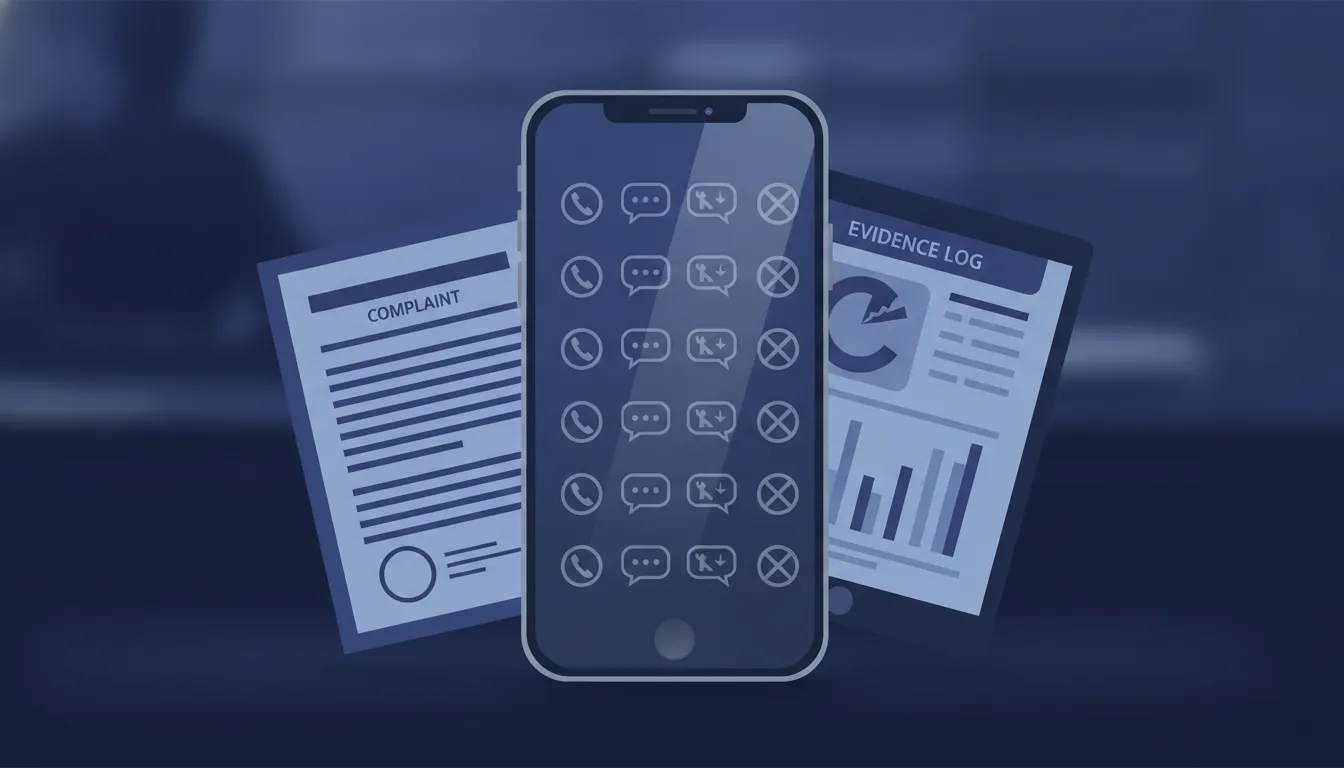
A strong record can be the difference between a frustrating story and a claim that an attorney can evaluate. Preserve evidence before deleting, blocking, or changing devices.
Build a record that another person can understand
Your evidence should tell a clear chronological story without relying on memory. Keep original screenshots, voicemails, and call logs, then create a separate timeline that explains what happened. For each contact, record the date, time, originating number, company or product promoted, whether the message sounded prerecorded, and your response.
Keep records of how the caller obtained your number when possible. Save forms, purchase confirmations, account settings, and terms that may show whether you gave consent. If you opted out, preserve the complete conversation around that request rather than only the STOP message. Back up the files somewhere other than the phone so a damaged or replaced device does not erase the history.
Do not edit recordings or crop screenshots so tightly that dates and sender details disappear. Original files and complete message threads can make it easier for an attorney to assess your rights under the TCPA. If the communication is part of a broader privacy concern, Counsel Hound’s guide to hiring a data breach lawyer explains related evidence and attorney-selection considerations.
- Save the complete communication. Take screenshots of texts and call logs. Preserve voicemails, recordings where lawful, and any prerecorded message. Include dates, times, and phone numbers.
- Identify the business. Note the caller’s name, the company promoted, website addresses, callback numbers, and anything said about the purpose of the contact. Do not provide sensitive personal information.
- Make a clear opt-out request. If appropriate, say “stop calling me” or reply STOP. Keep proof of the request and any confirmation. Document every later contact separately.
- Confirm do-not-call registration. Check whether your number is registered and save confirmation. Remember that registration does not make every call unlawful.
- Create a contact log. Record each call or text in chronological order. Include whether you answered, what you heard, and how you responded.
- Seek a legal review promptly. Deadlines apply, and delay can lead to lost messages or unavailable records. An attorney can assess consent, exemptions, and responsible parties.
You may also report unwanted communications to the FCC or Federal Trade Commission. A government complaint is different from a private lawsuit, but it can help regulators track patterns.
Get a free case evaluation if unwanted calls or texts continued after your opt-out.
What compensation may be available for a TCPA violation?
The TCPA generally allows recovery of actual monetary loss or $500 per violation, whichever is greater, for certain successful claims. A court may increase statutory damages to as much as $1,500 per violation when it finds that the defendant acted willfully or knowingly. These figures come from the statute, but they are not automatic awards.
Why counting violations can be complicated
One phone campaign can involve many messages, numbers, and legal theories. Determining how many compensable violations occurred requires more than counting every row in a call log. Some contacts may be exempt, supported by consent, outside the applicable deadline, or treated together under the law.
A court can also consider evidence about the sender’s knowledge and conduct. Records showing clear opt-out requests followed by additional marketing contacts may be important. So may internal consent records, vendor contracts, and calling data that a consumer does not possess initially.
Other possible relief
Depending on the claim, a consumer may seek an injunction to stop unlawful communications. Settlement or litigation may also result in changes to a company’s calling practices. The available remedy depends on the facts, jurisdiction, and claims asserted.
Factors that can strengthen or weaken a claim
The clearest TCPA matters often include repeated communications, identifiable senders, complete records, and an opt-out that the sender appears to have ignored. A consistent message thread can help show what the sender promoted and when the consumer withdrew permission. Calls from changing numbers may still be connected when they share the same prerecorded message, callback route, or advertised company.
Other facts can make a claim harder to evaluate. A consumer may have agreed to communications while completing a form, opening an account, or entering a promotion. Some calls are informational, emergency-related, or otherwise subject to different rules. Number reassignment, business lines, and the particular dialing technology can also matter. That is why an attorney reviews the whole record rather than promising a value based only on the number of calls.
If pursuing a claim is appropriate, the process may involve identifying the business, sending a preservation request, reviewing consent records, negotiating, or filing suit. Counsel Hound’s step-by-step lawsuit guide offers a broader overview of what litigation can involve.
When should you speak with a TCPA attorney?
Consider obtaining legal guidance when prerecorded calls or automated texts continue after you opted out. When a campaign contacts you repeatedly from changing numbers, or when the sender ignores direct requests to stop. An attorney can evaluate whether the TCPA applies and whether other state or federal consumer-protection laws may also be relevant.
Legal review can help identify the responsible company, assess alleged consent, preserve evidence, and calculate potential violations. It can also prevent mistakes, such as deleting messages too early or relying on an incorrect deadline.
Counsel Hound connects consumers with vetted, experienced attorneys who handle complex legal matters. The network helps people cut through legal marketing and find counsel suited to their situation.
Frequently asked questions about TCPA rights
Can I sue for unwanted calls and texts?
Potentially. The TCPA gives consumers a private right of action for certain prohibited calls and texts. Whether a particular contact violates the law depends on consent, technology, message purpose, opt-out requests, exemptions, and other facts.
How much is a TCPA violation worth?
The statute generally permits actual loss or $500 per violation for certain claims. A court may increase statutory damages to as much as $1,500 for a knowing or willful violation. Results depend on the evidence and are not guaranteed.
Does the TCPA cover text messages?
Yes, text messages can be treated as calls for TCPA purposes. Automated marketing texts may be restricted when sent without the required consent or after a valid opt-out request.
Can I revoke consent?
Consumers can often revoke consent through reasonable means, such as replying STOP or directly asking the caller to stop. The rules can vary based on the agreement and circumstances, so preserve proof and seek advice if contacts continue.
Does the National Do Not Call Registry stop every call?
No. Some calls are exempt or governed by different rules. Registration can still provide important protection against certain telemarketing calls and help document a potential claim.
Protect your rights after unwanted calls or texts
You do not have to sort through complicated calling rules alone. Counsel Hound can connect you with an experienced attorney who can review your records, explain your options, and determine whether you may have a TCPA claim.
Request a free consultation with Counsel Hound. There are no upfront fees, and no fees until we win.