
A personal injury case can disrupt your health, work, and finances long before an insurer offers a fair resolution. If you are asking how long does a personal injury lawsuit take, the uncertainty is often hardest when you do not know whether the process will take months or years.
Schedule a free case evaluation with Counsel Hound.
How long does a personal injury lawsuit take? A straightforward claim may settle within several months, while a disputed or complex lawsuit can take one to three years or longer. The timeline depends on medical recovery, the strength of the evidence, the number of parties. Insurance negotiations, the court’s schedule, and whether the case goes to trial or appeal. Moving quickly is not always the same as achieving a fair result. Settling before the long-term effects of an injury are known may leave future care, lost income, or other damages uncompensated.
Understanding the stages and likely sources of delay can help you make informed decisions. It also helps you distinguish productive case preparation from avoidable delay. For a closer look at the steps before litigation, read how the personal injury claims process works.
How long does a personal injury lawsuit take?
There is no single timetable for every personal injury case. A claim with clear fault, completed medical treatment, and well-documented losses may resolve through negotiations in a matter of months. A case involving disputed liability, severe injuries, multiple defendants, or a trial may remain open for several years.
The distinction between a claim and a lawsuit matters. A claim begins when an injured person seeks compensation from an insurer or responsible party. A lawsuit begins after a complaint is filed in court. Many claims settle before a lawsuit is filed, while others settle during discovery, mediation, or even shortly before trial.
| Case path. | What usually happens. | Why timing varies. |
|---|---|---|
| Pre-lawsuit settlement. | Investigation, treatment, demand, and negotiation. | Medical recovery and insurer response. |
| Lawsuit settled before trial. | Filing, discovery, depositions, and mediation. | Evidence disputes, experts, and court deadlines. |
| Trial and possible appeal. | Trial preparation, verdict, and post-trial proceedings. | Court calendar, complexity, and appeal issues. |
The table compares the main case paths and the factors that influence timing.
Why faster is not always better
An early offer can be appealing when medical bills and missed work create pressure. However, accepting a settlement generally ends the claim. If future treatment, reduced earning capacity, or lasting limitations have not been evaluated, a quick settlement may not reflect the full effect of the injury.
A careful attorney will usually investigate the accident, collect records, identify insurance coverage, and understand the medical prognosis before valuing the case. That preparation can take time, but it can also prevent decisions based on incomplete information.
Why a case may resolve sooner
Cases often move more efficiently when fault is supported by strong evidence, treatment records are complete, damages are clear, and the parties communicate promptly. Resolution may also be faster when the available insurance coverage is limited and all parties understand the practical range of recovery.
Even then, no attorney can promise an exact completion date. A useful early question is not simply how quickly the case can end. Ask which milestones must be reached before a fair settlement can be evaluated.
The stages of a personal injury lawsuit
A personal injury lawsuit is a formal legal path. It can feel slow, and it is often hard to know what steps come next. Knowing what to expect at each step helps you stay calm during the process. It also gives you a better idea of how long does a personal injury lawsuit take from start to finish. Most people find that their case moves through some clear phases before it reaches a final result.
The time your case takes often depends on how much help you need and how fast you heal. Many civil trial cases reach a result in less than two years. But every case is unique. Your lawyer will look at the facts of your injury to build the best plan for you. This path often starts with your health and ends with a check to cover your costs.
Initial care and case build
The first stage of any claim is your medical care. You must see a doctor to find out how bad your injuries are. This part of the process is key. You cannot ask for money until you know the full cost of your care. Your lawyer will also use this time to gather facts. They will look at police reports, photos, and witness notes. This help ensures that your case is strong from the very first day.
If you live in a state like California, you should act fast. Most personal injury legal help starts well before the legal deadline. For case, people in California usually have only two years from the date of the injury to sue. If you wait too long, you might lose your right to get help. Starting early gives your legal team more time to find proof and talk to experts.
The formal legal process
Once your health is stable, your lawyer can start the next phase. This is when the legal work becomes more formal. You and your legal team will decide the best way to move forward. This might mean sending a letter to the other side or filing a case in court. Each step is a chance to settle the matter and get you the funds you need to move on with your life.
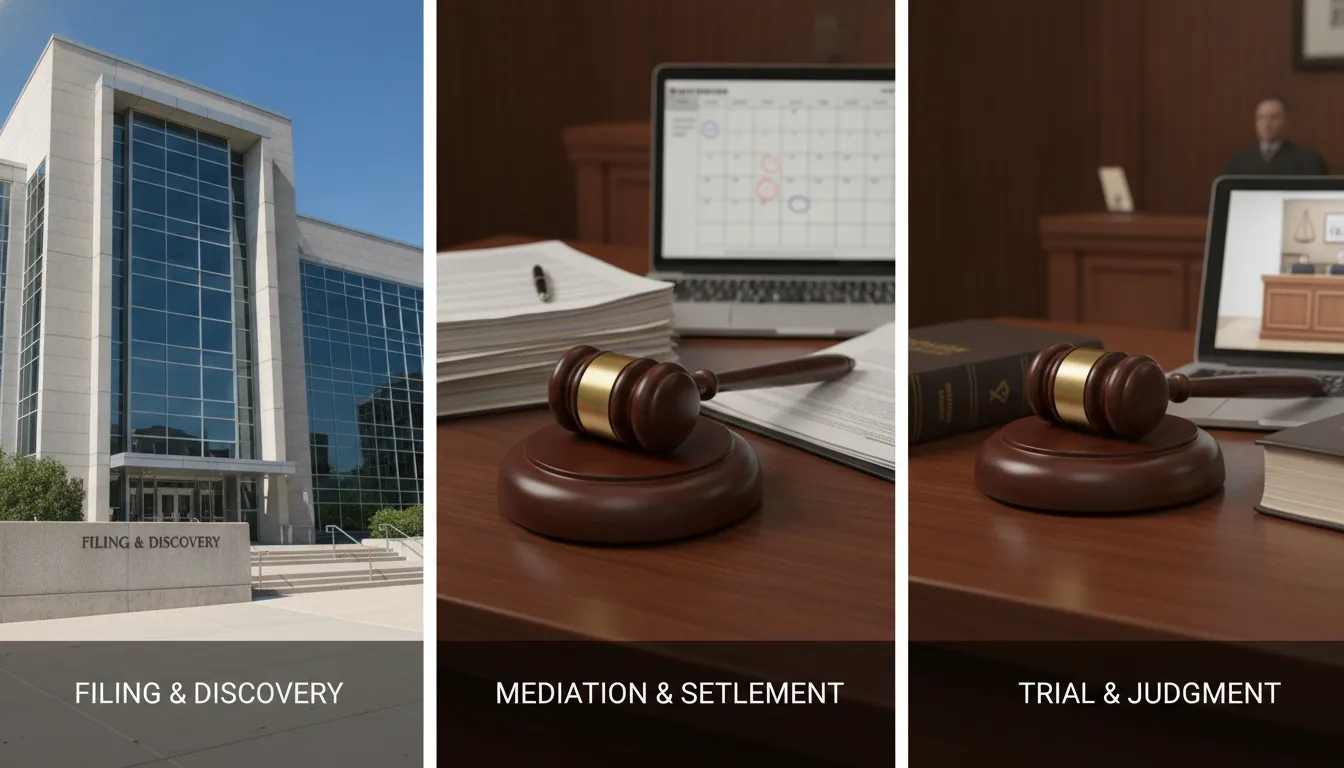
- Medical care and healing. You focus on getting better while your doctor tracks your progress. This stage ends when you reach your best level of health. Your lawyer needs these records to show how the injury changed your life.
- Search and demand. Your legal team looks for proof that the other person was at fault. Once they have the facts, they send a demand letter to the insurance company. This letter asks for a set amount of money to settle the case.
- Filing a complaint. If the insurance company says no or offers too little, your lawyer files a complaint in court. This starts the formal lawsuit. The other side must respond to your claims within a set time.
- The discovery phase. Both sides share facts and talk to witnesses. This is often the longest part of the case. Each side tries to find out as much as they can about what happened and who is to blame.
- Mediation and talks. Many cases reach a deal during mediation. A neutral person helps both sides talk and find a middle ground. This can save time and keep you out of a courtroom.
- Trial and verdict. If no deal is reached, the case goes to trial. A judge or jury looks at the proof and decides who wins. In large counties, the median time from filing to a verdict is about 22 months for jury trials.
Working with the right team can make this long path much easier. Counsel Hound connects you with lawyers who have a proven track record. Every attorney in the network goes through a deep check of their past and wins. You do not have to worry about the cost of these experts right away. Counsel Hound works on a free legal talk basis and you pay no fees until your case is won.
What factors affect a personal injury lawsuit timeline?
The same type of accident can produce very different timelines. The following factors often determine whether a case resolves through early negotiation or requires extended litigation.
Medical recovery and prognosis
The extent of an injury is one of the most important variables. Minor injuries may stabilize quickly. Serious injuries can require surgery, rehabilitation, follow-up care, and time to understand permanent limitations. A legal team needs records and medical opinions that explain both current losses and reasonably anticipated future needs.
Disputes about fault
A case can slow down when the parties disagree about who caused the injury. Attorneys may need police reports, photographs, video, witness statements, vehicle data, safety records, or expert analysis. When several people or companies may share responsibility, each may conduct a separate investigation and raise different defenses.
The value and complexity of damages
Large or complex claims usually receive closer scrutiny. An insurer may challenge whether treatment was necessary, whether an injury came from the incident, or how much income the injured person lost. Claims involving future care, reduced earning capacity, or permanent disability often require expert opinions and detailed documentation.
Insurance negotiations
Insurers need time to review a demand, but delay can also become a negotiation tactic. A prompt response does not guarantee a reasonable offer. When an insurer denies responsibility or undervalues documented losses, filing suit may be the appropriate next step.
Discovery, experts, and court schedules
After a lawsuit is filed, both sides exchange information through discovery. They may request documents, submit written questions, take depositions, and hire experts. Scheduling several attorneys, witnesses, doctors, and experts can add months. Court congestion, continuances, and the availability of a trial date also affect timing.
Settlement, trial, and appeal decisions
Many lawsuits settle before trial because the evidence and risks become clearer during discovery. If the parties cannot agree, the case proceeds to trial. Post-trial motions or an appeal can extend the process further. These decisions should reflect the strength of the evidence, the likely recovery, and the injured person’s needs, not impatience alone.
A lawyer can explain which of these factors apply to your case and which delays are necessary. For help assessing a claim, Counsel Hound can connect you with experienced personal injury attorneys.
Should you settle before reaching maximum medical improvement?
Maximum medical improvement, often called MMI, generally means a person’s condition has improved as much as doctors reasonably expect. Reaching that point does not always mean a complete recovery. It means the medical picture is clearer, including any ongoing treatment, restrictions, or permanent effects.
Settling before that picture is clear can create risk. A settlement is typically final. If you later need another procedure, more therapy, or workplace accommodations, you generally cannot reopen the case simply because those needs were not anticipated.
Why waiting can protect the value of a claim
A clearer prognosis helps an attorney calculate medical expenses, lost income, future care, and the effect of lasting limitations. It also provides stronger evidence when an insurer disputes the seriousness of an injury. Waiting for appropriate medical information is different from allowing a claim to sit without progress.
Why legal deadlines still matter
Medical treatment does not pause every filing deadline. Statutes of limitations vary by state and by the facts of the case. Claims involving government entities or other special circumstances may have shorter notice requirements. Missing a deadline can prevent recovery regardless of how strong the underlying facts may be.
An attorney can preserve the claim while medical care continues. If a deadline is approaching, filing a lawsuit may be necessary even though treatment is not complete. Speak with counsel early so there is time to investigate, identify responsible parties, and comply with the rules that apply in your jurisdiction. Counsel Hound’s personal injury statute of limitations guide explains how deadlines differ by state.
How can you avoid unnecessary delays?
You cannot control an insurer’s decisions or a court’s calendar. You can, however, reduce preventable delays and help your legal team build a complete record.
- Follow recommended medical care. Attend appointments, follow treatment instructions, and explain new symptoms to your providers. Gaps in care can make recovery harder and create disputes about the injury.
- Preserve evidence early. Save photographs, videos, incident reports, witness information, damaged property, bills, and correspondence. Evidence can disappear quickly.
- Keep records organized. Track appointments, expenses, missed work, and ways the injury affects daily activities. Provide requested documents to your attorney promptly.
- Be careful on social media. Insurers may review public posts and use them out of context. Ask your attorney how to protect your privacy without deleting potential evidence.
- Respond to your legal team. Discovery and court deadlines are strict. Prompt answers help counsel prepare accurate responses and avoid extensions.
Do not sacrifice the claim for speed
Avoidable delay should be addressed, but necessary preparation should not be rushed. Medical evaluation, expert review, depositions, and negotiations can strengthen a case. Ask your attorney for the next milestone, what is being done now, and what information is still needed.
Good communication also helps set realistic expectations. An attorney cannot control every deadline, but should be able to explain why the case is at its current stage and what could happen next. If you have not yet spoken with counsel, request a free consultation to understand your options.
What happens after a personal injury case settles?
When you agree to a deal, you might think the work is done. But getting your money still takes a few more steps. People often ask how long does a personal injury lawsuit take, but the time after a deal is also key. The Bureau of Justice Statistics shows that most civil cases finish in under two years (bjs.ojp.gov). Once both sides agree on a price, the legal process moves into the payment phase.
Signing the release form
The first step is to sign a release form. This paper says that you agree to the deal. It also states that you will not sue the other person again for the same accident. You should look over this form with your lawyer. They will make sure the terms are fair before you sign it. This step is vital to protect your rights.
Once you sign, the insurance firm will send a check. This check goes to your lawyer first. They put it in a trust account. This account keeps your money safe while the law firm pays off any costs from your case. The firm will check the funds before moving to the next step.
Paying bills and liens
Before you get your check, your lawyer must pay back other groups. These are often called liens. If your health plan paid for your care, you must pay them back from your deal. Your lawyer also pays for medical bills that are still open. They work to get these costs as low as possible for you.
Your legal team also takes out the costs of the case. These costs include things like filing fees and the cost of expert help. At Counsel Hound, we connect you with top firms that offer personal injury representation. These firms handle the hard work of dealing with bills so you can focus on healing.
Getting your final check
After all the bills and fees are paid, your lawyer gives you the net amount. This is the final money that goes to you. The law firm takes their fee from the total sum at this time. Most personal injury lawyers work on a no-win, no-fee basis. This is called a contingency fee.
This means there are no fees until the law firm wins your case. This model helps people get justice without having to pay up front. The time it takes to get your final check can vary. It often takes a few weeks to clear all the liens and paperwork. If you have questions about your case, you can always reach out for a free consultation. Once everything is done, you receive the money you need to move forward.
When should you speak with a personal injury attorney?
Deciding when to get legal help after an accident is a big choice. Many people wait too long to talk to a lawyer. This can hurt their chances to get a fair payment. You should look for personal injury representation if your injuries are serious or if the insurance company denies your claim. Legal help is also needed if the crash involved many cars or if the fault is not clear.
If you are comparing your options, this guide to finding a personal injury lawyer near you explains the credentials and questions worth considering.

Serious or permanent injuries
If you have injuries that need long-term care, you should speak with a lawyer. A lawyer helps you find the full cost of your medical needs. This includes future bills and lost pay. Without a lawyer, you might take an offer that is too low to cover your long-term costs. In some states, you only have two years to file a case after an injury happens. For example, California law usually gives you two years from the date of the injury to sue. Missing these dates means you cannot get any money for your harm.
Low settlement offers
Insurance companies often try to settle cases quickly for small amounts of money. These early offers may only be 30 to 40 percent of what your case is worth. An attorney knows how to fight for a better deal. They handle the talk with the insurance adjuster so you can focus on getting well. Government data shows that most civil trials end in less than two years. Having a lawyer helps make sure your case moves as fast as it can through the system.
Free help with no risks
You may worry about the cost to hire a law firm. Counsel Hound makes this easy by connecting you with vetted lawyers. Every lawyer in the network goes through a deep check of their background and past wins. We offer a free consultation to help you understand your legal paths. You do not have to pay any fees until your lawyer wins your case. This “no win, no fee” model helps you get the legal support you need without any upfront cost or financial stress.
Frequently Asked Questions
How long does a personal injury lawsuit take to settle?
Most civil cases reach a finish in less than two years. According to the Bureau of Justice Statistics, about 60 percent of trials end within this time. However, the exact length depends on how complex your case is and the court’s plan. Simple claims with clear fault often finish much faster than cases that need a full jury trial.
Why do some personal injury cases take so long to resolve?
Three main reasons often cause a claim to take a long time. First, there may be hard questions about who was at fault. Second, cases that involve large sums of money need more study from insurance firms. Finally, you should not settle until your medical team knows the full scope of your harm. Waiting helps you get enough money to cover all future care needs.
Is it better to settle quickly or wait for a trial?
A quick payout often means you get less money. Early offers from insurance firms might only be 30 to 40 percent of what you could get later. While waiting is hard, it often leads to a better result. Taking money too soon can leave you without enough for long-term costs. It is usually best to wait until your lawyer can prove the full value of your claim.
What happens if I can’t afford a personal injury lawyer?
Many people worry about the cost of hiring a lawyer. Most firms in the Counsel Hound network work on a fee plan based on your win. This means you do not pay any money up front. Counsel Hound works with no fees until we win your case. If you do not get a payout, you do not owe the firm any money for their work.
Get clarity about your personal injury timeline
The right next step depends on your injuries, evidence, filing deadlines, and the insurer’s position. Counsel Hound connects injured people with trusted attorneys who can evaluate the case, explain likely milestones, and protect the right to pursue compensation. Consultations are free, and there are no fees until you win.